As the world pivots from hydrocarbons toward cleaner sources, the flow of capital into renewables is reshaping our energy landscape. This article explores how financing models, policy drivers, and technological advances unite to power a sustainable future.
The redirection of global capital marks a historic shift. In 2025, total energy investment reached $3.3 trillion, with clean energy investment doubling fossil fuels at $2.2 trillion. Solar alone captured $450 billion.
Key financial instruments are accelerating growth. Green bonds and innovative financing tools channel private and institutional funds into projects. Government policies—like the U.S. Inflation Reduction Act—have catalyzed a 50% surge in nuclear funding and spurred corporate net-zero pledges.
This ecosystem of capital ensures that the renewable transition is not a niche but a mainstream investment opportunity.
Different renewable technologies attract distinct investor profiles based on maturity, return timelines, and policy support.
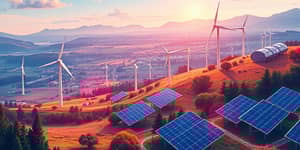
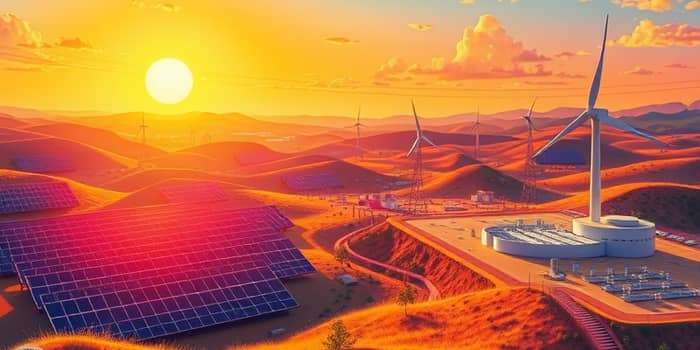
Solar energy dominates new commitments, driven by dramatic cost declines and integration of energy storage. Utility-scale and rooftop solar combined accounted for 83% of incremental global electricity demand growth in the first half of 2025.
Wind power, both onshore and offshore, continues to grow. In Q1 2025, the U.S. saw $3.9 billion in wind investments, while Europe pushed ahead with large offshore projects under its Green Deal targets.
Battery storage is critical for grid reliability. Despite quarterly volatility, combined investment in storage and solar reached $14.4 billion in Q1 2025. Heat pumps and distributed generation also experienced a consumer spending boom, reflecting decentralization trends.
Nuclear energy, once stagnant, now enjoys renewed interest. Investment surpassed $70 billion globally and expanded by 50% over five years, thanks to next-generation and small modular reactor projects.
Investment patterns vary across regions, shaped by policy frameworks, resource endowments, and market maturity.
In North America, the U.S. led with $67.3 billion in clean energy and transportation capital in Q1 2025, a 6.9% year-over-year increase. Texas alone generated nearly 13,000 jobs and opened 2,369 new facilities since Q3 2022 under the IRA’s incentives.
Europe remains aggressive. Germany and Denmark spearhead grid modernization and offshore wind deployment. Corporate giants like Google and Amazon sign large-scale clean power contracts, cementing Europe’s status as a clean energy hub.
The Asia-Pacific region, led by China and India, is rapidly expanding solar manufacturing, EV infrastructure, and grid upgrades. China’s domestic storage investments and export capacity have solidified its role as a renewable manufacturing powerhouse.
Despite promising momentum, several obstacles temper enthusiasm:
In addition, ensuring the long-term environmental and social benefits of each project is critical. Sustainable financing criteria and rigorous impact assessments must keep pace with capital flows.
Government incentives remain decisive. Tax credits, grants, and mandates under the IRA and the EU Green Deal have proven that targeted subsidies unlock private investment.
Corporate responsibility further amplifies financing. With net-zero targets for 2040 becoming the norm, companies are deploying balance-sheet capital and signing multi-year power purchase agreements.
Technological progress—such as advanced battery chemistries and digital grid management—continues to drive down costs and enhance system efficiency. New business models, including virtual power plants, are starting to attract venture capital and corporate investments.
The International Energy Agency projects that clean energy investments must exceed $4 trillion annually by 2025 to stay on track for net-zero by 2050. While announced and under-construction pipelines total $522 billion in the U.S. alone, global bottlenecks in permitting, supply chains, and policy alignment threaten to slow the pace.
More capital is essential to meet climate goals. Investors, policymakers, and industry must collaborate to streamline approvals, strengthen supply chains, and expand financing vehicles that balance risk and returns.
Investors can harness these trends by adopting strategic approaches:
By aligning financial decisions with climate and equity goals, capital providers can play a central role in delivering a resilient, low-carbon energy system for generations to come.
References