The traditional race for ever-increasing GDP overlooks ecological limits and human well-being. A steady-state economy proposes an alternative paradigm: one that balances our needs with Earth’s finite capacity. This article explores how success is redefined when growth is no longer the ultimate goal, and offers practical pathways to a sustainable future.
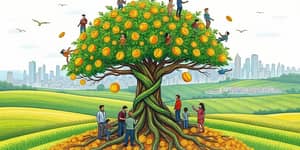
Rooted in ecological economics, the steady-state model challenges decades of growth-oriented policy. By prioritizing quality of life, distributional fairness, and ecosystem health, it invites societies to evaluate what truly matters.
John Stuart Mill first articulated the notion of a stationary state in 1848, suggesting that prosperity did not require relentless expansion. Almost a century later, the Club of Rome’s Limits to Growth study (1972) sounded alarms about resource depletion. Herman Daly, a pioneering ecological economist, synthesized these ideas in the 1970s and formally defined the steady-state economy.
Daly insisted that perpetual growth on a finite planet is a logical impossibility. His critique of neoclassical economics emphasized that GDP growth often masks environmental degradation, social inequality, and diminishing returns.
At its heart, the steady-state model rests on constant population and capital stocks, ensuring that the economy fluctuates only mildly around a sustainable equilibrium. This means:
These rules safeguard vital ecosystem services and emphasize sustainable use of renewable resources. They call for careful management of fisheries, forests, and agricultural lands, extracting only what can naturally regenerate.
GDP, by design, rises with increased production and consumption, regardless of whether these activities improve lives. In a steady-state economy, it is deemphasized as a success metric. Instead, alternative indicators take center stage:
By focusing on well-being and ecological health, policymakers can align incentives with long-term prosperity rather than short-term gains. A stable, sufficient material standard of living becomes the goal, with equitable distribution to ensure that no one is left behind.
Shifting to a steady-state economy has profound implications for labor markets and social policy. With constant output levels, the focus turns to optimizing labor distribution rather than boosting productivity endlessly.
Practical reforms include reduced workweeks and job sharing, enabling high employment rates even with moderate per-worker consumption. Retirement ages and benefit structures can be adjusted to maintain intergenerational equity, ensuring that social security remains viable without growth-driven tax revenues.
Furthermore, fairer income distribution becomes essential. Since additional GDP cannot be relied upon to alleviate poverty, redistribution through progressive taxation and social programs helps maintain social cohesion and prevents ecological overshoot driven by inequality.
Implementing a steady-state economy demands comprehensive policy reforms across multiple domains. Key strategies include:
These measures face significant hurdles. The cultural equation of growth with progress is deeply entrenched. Political resistance is strong, as vested interests defend current modes of production and consumption. Determining safe ecological boundaries also involves scientific uncertainties and value judgments, particularly regarding global equity between developed and developing regions.
Transition requires bold leadership at all levels: municipal pilot projects, national policy shifts, and international agreements. Experiments like Doughnut Economics in Amsterdam and localized degrowth initiatives demonstrate that alternative models can inspire broader change.
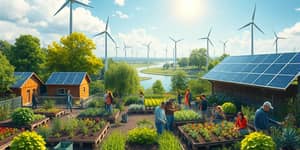
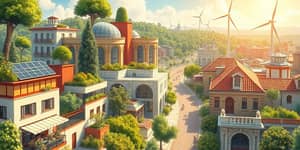
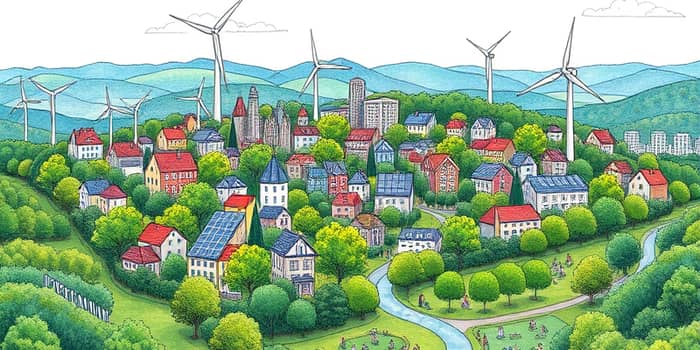
Envision a world where success is measured by healthy ecosystems, robust communities, and individual fulfillment. In this future, cities teem with green spaces, renewable energy provides abundant power, and citizens enjoy ample leisure, education, and cultural opportunities.
Innovation in a steady-state economy takes the form of qualitative development. New technologies enhance resource efficiency and reduce waste. Social innovation fosters stronger civic engagement, ensuring democratic governance over environmental limits. Education and culture flourish, enriching human experience without expanding material throughput.
This transformation is neither easy nor guaranteed. Yet the steady-state model offers a coherent framework to navigate planetary boundaries while promoting fairness and well-being. By redefining success beyond growth, societies can craft resilient economies that endure for generations.
The path ahead demands collective will, informed debate, and incremental experiments. As individuals, communities, and nations adopt elements of steady-state thinking—embracing quality of life over quantity of output—the vision of sustainable prosperity becomes attainable.
Ultimately, the shift beyond growth is more than an economic adjustment: it is a cultural renaissance, reclaiming the dignity of balanced living in harmony with nature. Let us rise to the challenge, redefining progress on terms that respect both people and planet.
References