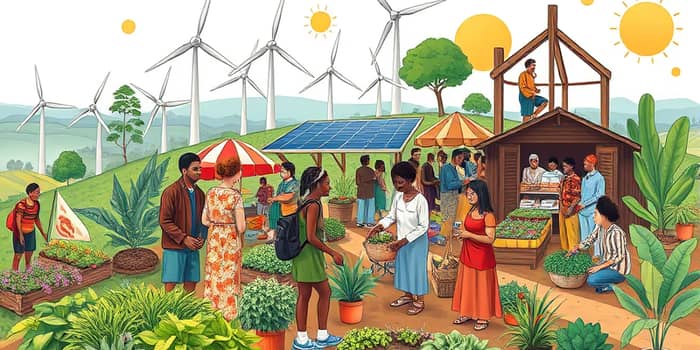
In recent years, business leaders and policymakers have begun to challenge the notion that profitability alone defines success. As global challenges like climate change, inequality, and social unrest intensify, a new paradigm is emerging.
This shift demands metrics that account for human and environmental health alongside traditional financial indicators.
The socially conscious economy prioritizes ethical considerations, accountability, and long-term community welfare. It shifts focus from maximizing shareholder returns to creating value for all stakeholders.
At its core, this model seeks to balance ethical, social, and environmental well-being with economic growth, recognizing that sustainable prosperity requires more than quarterly earnings.
This approach draws on stakeholder theory and common good economics, challenging the classical model of shareholder primacy. By recognizing ecological and social capital alongside financial capital, businesses embark on a journey toward holistic value creation.
The circular economy paradigm further reinforces this vision by designing waste out of systems and keeping resources in use. Organizations adopt models that regenerate ecosystems, reduce inequality, and foster resilient local economies.
To truly assess impact, organizations adopt metrics that track social and environmental outcomes rather than purely financial indicators. This holistic measurement fosters strategic decision-making.
Leading frameworks include ESG scores, B Corp Certification, and detailed impact reports that quantify specific outcomes—tons of CO₂ saved, number of beneficiaries, or dollars reinvested in social programs.
Recent figures highlight this movement’s scale: global green bond issuance topped $500 billion in 2023, while over $35 trillion in assets are managed under ESG criteria, accounting for more than 30% of all professionally managed investments. These trends reflect growing confidence that environmental and social considerations drive long-term financial returns as effectively as traditional revenue streams.
Innovative companies are redefining value creation through targeted strategies that embed ethical principles into every process. From sourcing raw materials to product disposal, accountability is paramount.
By weaving accountability into supply chains, leaders prioritize stakeholder value over profit without sacrificing long-term viability or market competitiveness.
In Hawaii, tourism boards partner with organic farmers to reduce the environmental footprint of visitors. Tourists enjoy farm-to-table experiences that support local communities and restore natural habitats. This model shows how ethical consumption and local empowerment can align seamlessly.
In the fashion industry, the “Not a Sweatshirt” campaign shed light on exploitative labor practices and drove consumers toward transparent brands. Major labels responded by publishing supply chain audits and adopting fair wage policies, demonstrating the impact of mass mobilization through stakeholder-driven social and market change.
Electronics firms are pioneering product-as-a-service models: leasing devices rather than selling them outright, then reclaiming and refurbishing units at end of life. This minimizes waste and fosters a repair culture that benefits both planet and profit.
Despite growing enthusiasm, shifting to a socially conscious model is not without hurdles. Many organizations struggle to balance complex priorities and quantify intangible benefits.
Yet evidence shows that purpose-driven businesses build long-term sustainable economic resilience, earn deeper consumer loyalty, and unlock new markets driven by conscious consumerism.
Government frameworks play a critical role in fostering a supportive environment for conscious enterprises. Incentives for green infrastructure, fair trade agreements, and public investment in social services are key levers.
Indigenous wisdom and multicultural philosophies emphasize communal well-being and reciprocity, offering profound lessons on harmonious living and resource sharing that can inform modern economic systems.
As ethical criteria become mainstream, several trends are set to accelerate:
Ultimately, the socially conscious economy represents a profound transformation. Success will be measured by the depth of positive impact and the capacity of organizations to nurture thriving ecosystems—human and environmental alike.
By adopting robust metrics, embedding ethical values, and collaborating across sectors, businesses can chart a course where prosperity is defined not only by earnings, but by lasting progress for people and planet.
References