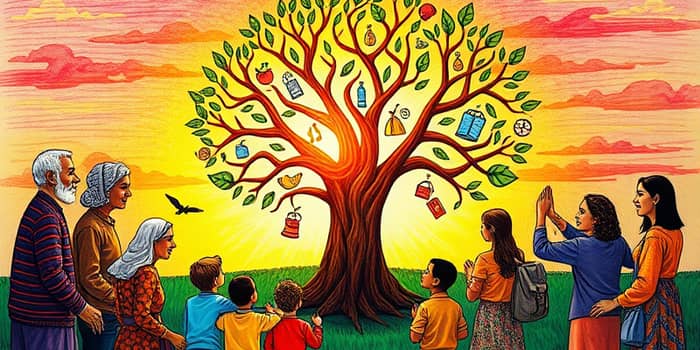
As trillions of dollars shift hands between generations, there lies an unprecedented chance to blend tradition with innovation. This article explores how intergenerational leadership models and values-driven stewardship can transform mere wealth transfer into a lasting legacy.
The Great Wealth Transfer is set to reshape the financial landscape. Estimates place the total shift between $83 trillion and $124 trillion from Baby Boomers and older Americans to heirs and charities by 2048. Of this, roughly $74–$85 trillion represents vertical transfers to descendants, while $9–$40 trillion moves laterally—mostly to surviving spouses. Charitable giving could absorb $11.9–$18 trillion in philanthropic contributions.
This scale is historic. Millennials are poised to inherit the largest share—an estimated $45.6–$46 trillion over 25 years—while Gen X will receive $39–$46 trillion, including $14 trillion in the next decade. Although exact figures for Gen Z remain fluid, their eventual stake will be significant.
The trend for women’s wealth is equally striking. Over 28 million widowed women will manage about $40 trillion, and women overall will control $47 trillion in inherited assets. The broadening asset classes—from real estate and equities to private investments—reflect both market growth and a pandemic-fueled surge in US household wealth (from $108 trillion to $154 trillion between 2020 and 2023).
Intergenerational leadership integrates multiple age groups into governance, fostering mutual mentoring and co-creation. When organizations embrace this approach, they harness the unique perspectives of each generation, driving resilience and innovation.
Empirical research underscores the payoff. Age-diverse boards outperform peers in return on assets and risk-adjusted metrics. A Dutch study identified a “goldilocks” range of age diversity that correlates with superior solvency and lower volatility. Moreover, replacing an over-65 board member with a younger counterpart improves corporate social responsibility outcomes by 15%, reflecting heightened environmental and social awareness.
The family socialization model reveals how early influences shape financial priorities. While all generations value security and growth, younger cohorts—millennials and Gen Z—often emphasize socially responsible investing and impact-driven portfolios. Older generations tend toward wealth preservation and traditional philanthropy.
These differences are magnified by digital fluency. Younger heirs prefer transparent, collective decision-making via tech-driven platforms, channeling assets into ESG (Environmental, Social, Governance) or impact vehicles. Wealth managers are adapting, integrating digital tools and offering bespoke strategies that align with these values-driven preferences to retain relevance.
As new custodians of wealth, women and younger adults will reshape its deployment. With women projected to oversee $47 trillion, philanthropic priorities may shift toward community-driven causes and equity-focused initiatives. Meanwhile, millennials’ anticipated $46 trillion inheritance underscores their role as catalysts for social innovation.
These emerging stewards bring a collaborative mindset. They are more inclined toward shared decision-making, peer networks, and purpose-led enterprises. This transition challenges traditional wealth firms to broaden service offerings, combining preservation with strategies for measurable social impact.
Intergenerational leadership not only uplifts family wealth but also transforms corporate and nonprofit governance. Organizations with age-diverse teams show improved risk management, stronger stakeholder engagement, and heightened creativity.
Intergenerational boards at churches and NGOs foster greater cohesion and institutional longevity. Similarly, multinational corporations integrating younger directors report better sustainability performance, balancing short-term returns with long-term environmental and social goals.
Despite vast opportunities, the transition poses hurdles. Unequal distribution concentrates wealth among the top 2% of households, potentially exacerbating inequality. The digital divide may leave some heirs without the tools or literacy to engage effectively.
Values conflicts can also emerge, pitting traditional preservation goals against impact-driven ambitions. Financial institutions face the task of reconciling these divergent priorities while offering tailored planning and robust governance frameworks.
The Great Wealth Transfer offers more than a simple handoff; it presents a moment to embed social purpose at the core of legacy planning. By championing age-diverse leadership and collective stewardship models, families and organizations can ensure wealth serves broader societal goals.
Ultimately, true legacy is measured not by asset values alone, but by the enduring positive impact on communities, the environment, and future generations. Now is the time to act, to transform a historic financial event into a beacon of social progress and sustainable prosperity.
References