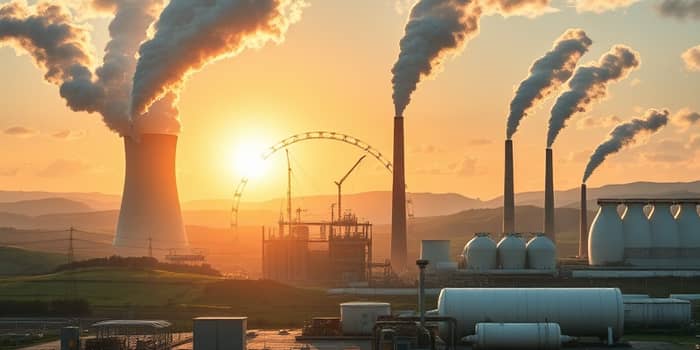
As the climate crisis intensifies, investors, policymakers, and innovators are turning their attention to a solution that transcends traditional renewables. Carbon capture technologies, once niche, now stand at the vanguard of a critical tool in climate investment. By removing and storing carbon dioxide from industrial sources and the atmosphere, these solutions can decarbonize sectors previously deemed immutable.
From the cement kilns of Europe to the coal plants of China, carbon capture offers a pathway to balance economic growth with environmental stewardship. This article delves into the technologies, market dynamics, projects, and strategies fueling a sustainable future.
Carbon Capture, Use, and Storage (CCUS) encompasses a portfolio of methods designed to trap CO₂ emissions at their source or extract them directly from the air. Traditional CCS captures emissions from power plants and industrial facilities, channeling the gas for permanent underground storage or beneficial uses, such as enhanced oil recovery. Direct Air Capture (DAC), by contrast, removes carbon dioxide from ambient air, offering a means to address legacy emissions and achieve negative emissions.
Each approach brings its own maturity curve, cost profile, and deployment challenges. Yet together, they form a comprehensive toolkit for capture carbon dioxide emissions at scale and pave the way toward net zero targets.
Global CCS capacity today stands at over 40 million metric tons of CO₂ captured per year, with projections indicating a fourfold increase by 2030. Investment flows into carbon capture systems are expected to total roughly $80 billion between 2025 and 2030, with North America and Europe leading the charge.
Despite this growth, carbon capture must accelerate six times faster to align with comprehensive net-zero pathways. The next half-decade will be pivotal for scaling up infrastructure, driving investment essential to global decarbonization efforts.
Hard-to-abate sectors account for a significant share of industrial emissions. Carbon capture offers targeted decarbonization solutions in areas where electrification alone cannot deliver deep cuts.
By integrating capture systems into these industries, we unlock a global economic opportunity for sustainable growth and job creation in regions historically reliant on high-carbon activities.
Real-world demonstrations highlight the feasibility and impact of carbon capture at scale. Landmark initiatives include:
These projects serve as beacons for further innovation, illustrating how partnerships between corporations, governments, and research institutions can drive breakthroughs.
Governments worldwide are crafting policies to accelerate deployment and reduce costs. In the United States, the 45Q tax credit offers $50 per ton for stored CO₂ and $35 per ton for CO₂ used in enhanced oil recovery.
By aligning fiscal incentives with environmental imperatives, policymakers can catalyze a 14% cost reduction in CCS operations by 2030 and foster driving unprecedented climate action and innovation across industries.
Despite its promise, carbon capture faces hurdles in technology readiness, infrastructure build-out, and public acceptance. Transport and storage networks require robust monitoring and verification systems to ensure long-term carbon removal integrity.
Political hurdles—such as fragmented regulations and community concerns—must be addressed through transparent stakeholder engagement and clear governance frameworks. Meanwhile, novel startups in the DAC space need sustained funding to move from demonstration to commercial scale.
Collaboration is key: oil and gas incumbents bring expertise and capital, while clean-tech innovators deliver fresh perspectives. Together, they can chart a path toward unique role in decarbonizing industry sectors.
Looking ahead to 2050, carbon capture could remove up to a quarter of all captured CO₂ via DAC and similar negative emissions technologies. Expansion into synthetic fuels, building materials, and chemical precursors will diversify revenue streams and embed captured carbon into value chains.
Emerging carbon dioxide removal (CDR) credit markets will further incentivize permanent removal, enabling corporations and individuals to claim verifiable climate benefits. Cultivating societal willingness to pay for legacy carbon removal will shape the scale and pace of deployment.
With government backing, cost declines, and market maturation, carbon capture can move from a peripheral solution to a central pillar in global decarbonization strategies.
The imperative is clear: to avert the worst impacts of climate change, we must mobilize capital, policy, and creativity toward carbon capture at unprecedented scale. Investors can channel funds into CCUS projects, startups, and infrastructure, while supporting robust market frameworks that reward real-world impact.
By embracing carbon capture as an integral element of climate portfolios, stakeholders can drive transformative change, secure economic resilience, and leave a legacy of environmental stewardship. The time to act is now—our collective future depends on the choices we make today.
References