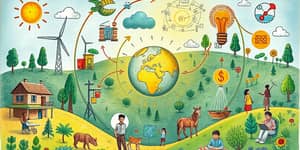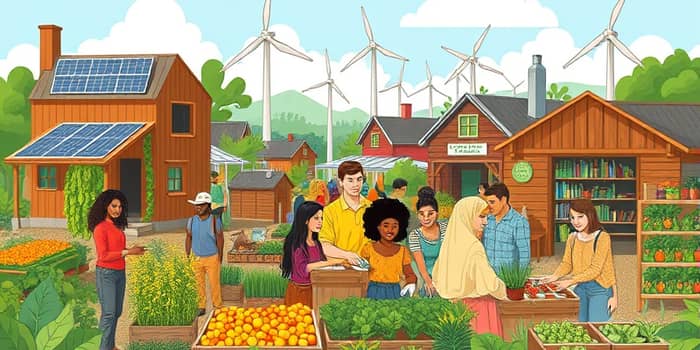
In an era of global uncertainty and widening inequality, the concept of local regenerative economies offers a hopeful pathway. By redistributing wealth within communities and prioritizing ecological restoration, these models challenge extractive systems and envision societies where prosperity is shared, ecosystems are healed, and resilience is woven into the fabric of daily life.
Traditional economic frameworks often extract resources and wealth from local communities, enriching distant actors while leaving social and environmental scars behind. In contrast, regenerative models aim to go beyond mere sustainability, seeking to give back more than they take from nature and society. Through holistic, systems-based thinking, these approaches integrate ecological health, social well-being, and economic vitality into a unified vision.
At their core, regenerative economies emphasize active community participation and the revival of localized systems. They foster connections between producers, consumers, and the land, ensuring that value creation directly benefits the people and ecosystems involved.
A regenerative economy is defined as one that “renews ecological, societal, and economic systems for a net positive impact.” Unlike extractive or simply sustainable models, regenerative frameworks embed feedback loops that replenish soil health, enhance biodiversity, and strengthen community bonds.
Central to this vision is the principle of restoring and preserving ecosystems. By aligning economic activities with local ecological capacities, communities can maintain healthy soils, clean water, and thriving habitats—essential foundations for long-term prosperity.
Another hallmark is participatory governance and shared ownership. Cooperative enterprises, community land trusts, and commons-based models distribute decision-making power and financial rewards across all stakeholders, preventing the concentration of wealth and influence.
Translating regenerative ideals into practice requires concrete tools and strategies. Communities around the world have piloted innovative mechanisms to ensure that economic value remains local, equitable, and resilient.
To assess progress, communities can track multiple indicators that reveal economic, social, and ecological gains. By measuring these metrics, stakeholders can adapt strategies and celebrate tangible successes.
Transitioning to regenerative, decentralized economies unlocks a suite of interlinked advantages that bolster community well-being, environmental health, and economic stability.
Despite compelling benefits, building resilient local regenerative economies is not without hurdles. Balancing local self-reliance with essential global trade, aligning policies across governance levels, and overcoming entrenched corporate incentives are significant challenges.
Defining appropriate bioregional boundaries requires interdisciplinary collaboration among ecologists, planners, and community members. Ensuring equitable access to resources and decision-making demands proactive inclusion of historically marginalized groups.
To navigate these obstacles, communities can adopt adaptive governance frameworks that respond to evolving conditions, leverage digital platforms for resource sharing, and forge networks—such as the Fab City initiative—that connect local experiments to global peer learning.
The journey toward decentralized, regenerative economies is both ambitious and urgent. It calls for bold experimentation at the local level, combined with supportive policy reforms that scale successful models. By investing in cooperative enterprises, community-led planning, and ecological restoration projects, we can reimagine prosperity as a collective endeavor.
Ultimately, building resilient local regenerative economies demands courage, creativity, and solidarity. As we weave new economic tapestries that honor people and planet, we move closer to a world where wealth is shared, ecosystems flourish, and communities thrive in harmony.
References