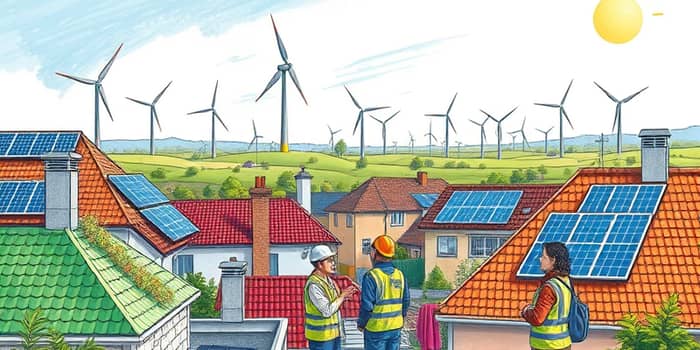
The global shift toward a low-carbon future is well underway, but without deliberate attention to social justice, the benefits of climate technology risk bypassing the communities that need them most. Financing a just transition demands more than capital—it requires a commitment to equity, democracy, and shared prosperity. This article explores how innovative funding mechanisms, policy frameworks, and community engagement can unlock a truly fair and inclusive clean energy revolution.
The concept of a just transition emerged from labor and environmental justice movements in North America during the 1970s and 1980s. Unions and grassroots organizations sought to protect workers and vulnerable communities from the disruptive impacts of environmental regulation. Today, the principle is enshrined in international agreements such as the Paris Agreement and has gained new prominence at COP28.
At its core, a just transition is about shifting to a regenerative, low-carbon economy while ensuring a fair, inclusive, and equitable transition for all parties. It calls for repairing historic injustices, redistributing opportunities, and empowering frontline communities to lead the change.
Decarbonizing sectors like electricity, heavy industry, transport, and agriculture presents both significant opportunities and risks. On one hand, studies project the creation of millions of new jobs, higher global GDP, and improved energy access. On the other, unmanaged transitions can result in job losses, social disruption, and widening inequalities.
For example, coal-dependent regions face the dual challenge of phasing out fossil fuel industries while building alternative livelihoods. Without targeted support, displaced workers and marginalized communities may be left behind. Achieving social equity in climate tech requires collaborative partnerships across public and private sectors that prioritize reskilling, social protection, and community resilience.
Governments and international bodies have begun integrating just transition principles into policy frameworks. Diagnostic analysis, comprehensive impact assessments, and stakeholder consultations lay the groundwork for inclusive planning. Tools like the US Climate and Economic Justice Screening Tool and the EU’s Just Transition Mechanism guide investments toward the most vulnerable regions.
Effective governance demands transparency, accountability, and continuous adaptation. Embedding integrated policy and stakeholder engagement frameworks helps maintain trust and ensures policies evolve with community needs.
Bridging the finance gap for marginalized and impacted groups is critical to a just transition. Innovative funding models are emerging to direct capital where it is most needed. Examples include:
These mechanisms emphasize innovative financial models for social equity by channeling investment into job creation, skills development, and resilient infrastructure in historically disadvantaged areas.
True social equity extends beyond funding to governance and ownership. Energy democracy—where communities have control over energy resources—challenges top-down “techno-fix” approaches that can exacerbate inequality. Prioritizing community ownership and decision-making ensures benefits are distributed fairly.
Overcoming barriers to green finance for women, Indigenous peoples, and low-income communities is essential. Digital equity initiatives must bridge the technological divide, ensuring all stakeholders can access and contribute to climate tech innovations. Embedding community-driven governance and planning structures creates lasting social and economic empowerment.
Despite progress, risks remain that just transition rhetoric will be co-opted without substantive change. Purely technological solutions often ignore deep-rooted social and ecological injustices. To avoid this pitfall, it is imperative to track, measure, and report equity outcomes using transparent indicators.
Critical debates continue around reparations, redistributive policies, and community land rights. Policymakers and funders must remain vigilant against greenwashing and ensure that projects deliver genuine, measurable benefits for the most vulnerable.
Insights from global case studies highlight several success factors:
Examples like Brazil’s rural equity programs and the Climate Justice Alliance’s energy democracy initiatives demonstrate the power of localized, participatory approaches.
As countries chart pathways to net-zero, financing a just transition will determine the political and social legitimacy of climate action. By centering social equity, deploying innovative finance, and empowering communities, we can ensure climate tech delivers prosperity for all.
Ultimately, a just transition is not a side benefit—it is the foundation for sustainable, resilient, and inclusive futures. The world’s response to the climate crisis will be judged not only by emissions reduced but by lives improved and communities strengthened.
References