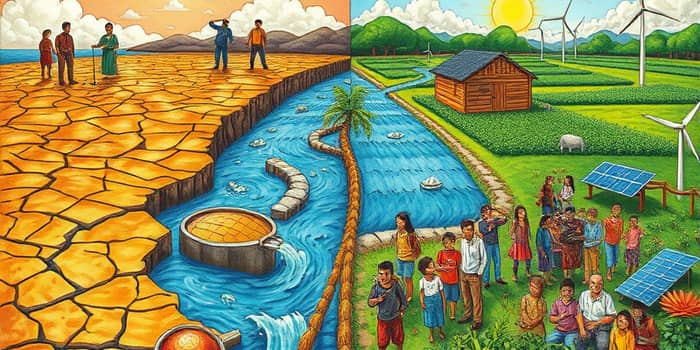
Across history, societies have grappled with the tension between limited resources and boundless human aspirations. The fundamental struggle of resource allocation shapes economies, influences policies, and molds individual behavior. Yet, recent decades have showcased a remarkable shift: innovative approaches are enabling communities to transcend traditional limits and embrace abundance. This article explores the journey from scarcity to abundance, detailing definitions, real-world challenges, psychological dynamics, economic transformations, and groundbreaking solutions.
Scarcity arises when resources are limited but demands rise, forcing allocation decisions and trade-offs. Every system—from household budgets to global supply chains—operates under constraints, compelling prioritization and rationing.
Abundance, by contrast, represents a state where basic needs and beyond are met for all stakeholders. It embodies a scenario in which supply outpaces critical demand, enabling growth, investment, and shared prosperity. Recognizing these two poles is essential to crafting strategies that move society toward sustainable abundance.
Manifestations of scarcity vary in scale and impact, from localized shortages to global crises. Understanding these examples reveals both acute challenges and the seeds of innovation.
The scarcity mindset fosters competition and fear, narrowing focus on immediate survival. Individuals and communities trapped in this mindset often forgo long-term planning, miss growth opportunities, and perpetuate cycles of poverty.
By embracing an abundance mindset encourages collaboration and growth, stakeholders unlock creativity, risk-taking, and collective problem-solving. This shift transforms adversarial relationships into partnerships centered on mutual benefit and resilience.
Innovation is the engine that propels societies toward abundance. Digital technologies—automation, artificial intelligence, and precision agriculture—multiply productive capacity, driving down costs and expanding access.
Renewable energy sources such as solar, wind, and hydropower are displacing finite fossil fuels. This transition lays the groundwork for sustainable power generation forever, reducing environmental impact while meeting growing demand.
Emerging frameworks blend data analytics, behavioral science, and decentralized technologies. These strategies optimize resource flows, minimize waste, and adapt dynamically to changing needs.
Policy frameworks must evolve to sustain abundance. Pilot programs for universal basic income demonstrate promising reductions in poverty and enhancements in social stability.
Scaling education and lifelong upskilling initiatives ensures that labor shortages become catalysts for human capital development worldwide, empowering individuals to participate in new industries.
Scarcity is a catalyst for innovation, not an unchangeable fate. By championing technology, collaborative mindsets, and equitable policies, societies can forge a path toward genuine abundance.
Transitioning from scarcity to abundance requires sustained commitment to equitable and efficient resource sharing. This journey is an invitation to imagine and build a world where every individual has the opportunity to thrive.
References