As the pace of global change accelerates, traditional education models struggle to equip young minds with the tools required for tomorrow’s challenges. Regenerative education emerges as a beacon of transformation, promising to create resilient thinkers and compassionate leaders.
Societies worldwide face converging crises: climate change, social inequity, and technological disruption. Conventional schooling, often centered on rote memorization and siloed disciplines, falls short in preparing learners to navigate complexity with empathy and innovation.
Investing in regenerative education is not merely a pedagogical choice—it is an imperative. By embracing an approach rooted in ecological wisdom and community collaboration, educators can prepare students for future challenges with purpose and agility.
This shift demands broad commitment from policymakers, funders, and communities. The result: a generation of learners who see themselves as active participants in shaping sustainable and equitable systems.
At its heart, regenerative education fosters interconnectedness—within the self, among people, and with the living world. These principles infuse every aspect of learning.
By embedding these pillars, educators promote a holistic sense of responsibility in every learner, nurturing empathy and foresight as core competencies.
Regenerative education sparks innovation by situating projects within authentic contexts. When students collaborate on real ecosystem restoration or community-driven enterprises, learning transcends the classroom.
Consider indigenous artisans in South America who integrate ancestral textile practices with fair-trade markets. Their work exemplifies groundbreaking grassroots entrepreneurial initiatives that honor tradition, support local economies, and protect biodiversity.
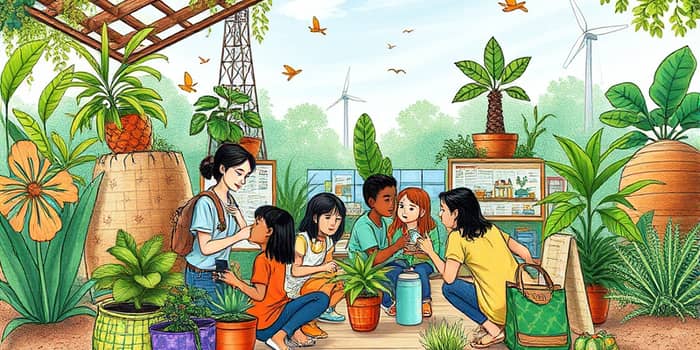
Similarly, school and community gardens across the UK engage youth in sustainable agriculture, teaching them to analyze soil cycles, design water-saving irrigation, and market produce. These experiences drive social entrepreneurship and strengthen communal bonds.
While standardized assessments remain limited, these indicators provide a scaffold for institutions to track progress and refine strategies.
These strategies help educators nurture systems-based critical thinking and foster environments where learners feel ownership of both process and outcome.
Transitioning to regenerative models requires overcoming entrenched mindsets. Traditional grading systems, rigid curricula, and limited resources can stifle innovation. Teacher training must expand to include facilitation skills, ecological literacy, and cultural competency.
Policy frameworks must prioritize sustained funding for experiential infrastructure—outdoor labs, digital platforms that respect indigenous protocols, and professional development. Equitable access remains essential: marginalized communities should be at the forefront of design, ensuring that benefits accrue broadly, not just to privileged groups.
Global resilience depends on how we educate our youth. By channeling investments into regenerative education, stakeholders sow the seeds for lasting transformation—cultivating learners who are inquisitive, compassionate, and equipped to co-create sustainable futures.
Now is the moment to unite educators, policymakers, philanthropists, and communities in a shared mission. Together, we can build an educational ecosystem that not only imparts knowledge but also revives our planet and nourishes the human spirit—cultivating empowered and resilient innovators ready to meet the complexities of the twenty-first century.
References