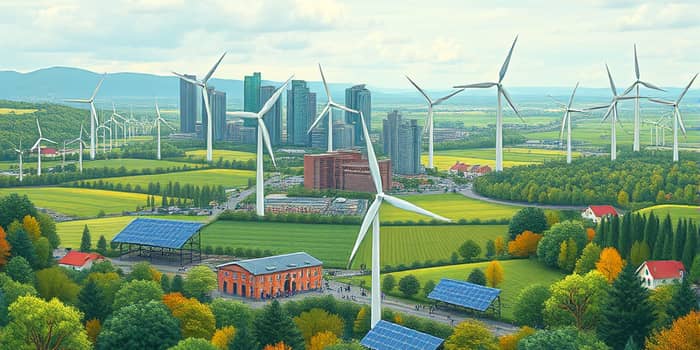
As climate impacts intensify, the economic imperative for decisive action grows clearer. We can transform risk into opportunity by aligning capital with innovation, nature, and policy. This article explores the case for investment, emerging solutions, and actionable steps to secure a resilient future.
Unchecked warming poses a direct threat to global prosperity. By 2049, climate change may cost the world $38 trillion per year, exceeding the entire GDP of the European Union. With a 2°C rise, some estimates project up to an 85% drop in global GDP by 2100. A 3°C warmer world resembles a persistent, global Great Depression.
Standard economic models often underestimate damages, omitting dynamic feedbacks, tipping points, and interconnected shocks. Vulnerable regions—particularly low-income countries—face the harshest blows due to limited adaptation capacity. As a result, average global incomes could decline by 19% within 26 years of committed emissions, deepening inequality.
Investing early in adaptation and resilience unlocks outsized benefits. Every dollar spent today can yield up to $19 in broader economic benefit. In emerging markets, the return soars to $12 per dollar. In the United States, analysts estimate that investing in resilience avoids $13 in damages and cleanup costs for each dollar deployed.
According to the World Resources Institute, shoring up infrastructure, early warning systems, and nature-based defenses delivers over $10.50 of benefit per dollar invested over ten years, with average annual returns of 20–27%. These figures underscore the stark contrast between the cost of action and the far higher cost of inaction.
Clean energy expansion drives down emissions while stimulating growth. Global clean energy investment in 2025 reached $1.7 trillion worldwide, surpassing fossil fuel spending. Renewable capacity has more than doubled since 2015, and states like California witnessed emissions declines in 2023 through aggressive policy and technology adoption.
Emerging markets for resilience technologies—from climate-smart agriculture to AI-powered resource management—are poised to grow from $2 trillion today to $9 trillion by 2050. Meanwhile, nature-based approaches can deliver up to 30% of needed emissions reductions by 2030 and create nearly 395 million jobs in sectors such as ecosystem restoration, agroforestry, and sustainable agriculture.
Mobilizing capital at scale requires innovative financial tools and robust policy. COP29 set a target of $300 billion annually for developing countries by 2035, yet trillions more are needed. Instruments such as debt-for-nature swaps, parametric insurance schemes, blended finance, and voluntary carbon markets are gaining traction as ways to bridge these gaps.
Policy levers like carbon pricing, green taxation, and subsidy reform strengthen market signals. Streamlining permitting processes and enforcing stable, long-term regulations unlock private investment. International cooperation on technology transfer and adaptation finance remains critical, especially for the most vulnerable economies.
The climate economy already outpaces many traditional sectors. Companies reducing emissions consistently grow revenues faster than global GDP, disproving the perceived trade-off between growth and sustainability. The adaptation solutions market alone could represent a $9 trillion opportunity by 2050.
Nature-based and renewable energy sectors are among the world’s fastest-growing job creators. Projections suggest nearly 400 million new positions by 2030 in reforestation, sustainable agriculture, clean energy deployment, and resilience infrastructure. These jobs advance both economic well-being and environmental health.
Despite progress, critical sectors remain underfinanced. Grid modernization, building efficiency upgrades, and large-scale ecosystem restoration lag behind investment needs. Deforestation has worsened in some regions, and building emissions continue to rise despite efficiency programs.
To bridge these gaps, stakeholders must collaborate across public and private spheres. Governments can enact stable, transparent policies; financial institutions can scale green lending and insurance; businesses can integrate climate risk into strategy; and communities can champion local restoration and conservation projects.
Delivering on the promise of a net-positive, resilient economy demands collective effort. By shifting perspectives—viewing climate solutions as long-term economic opportunities rather than costs—we can unlock transformative progress.
As we approach pivotal climate negotiations and market inflection points, the choice is ours: continue to accumulate costs through inaction or invest decisively in a resilient, prosperous future. By aligning finance, technology, nature, and governance, we can turn climate risk into an engine for inclusive, sustainable growth—securing prosperity for generations to come.
References