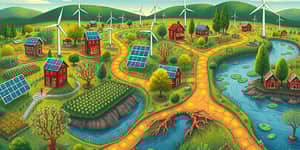
Every breath we take, every drop of water we drink, and every crop we harvest rely on direct and indirect benefits delivered by natural systems. Yet these services remain largely invisible in conventional financial statements and policy debates. By placing a value on ecosystem services, we can realign our economic choices with the true drivers of prosperity—the living world that sustains us.
In this article, we explore how communities, businesses, and governments are building a holistic policy framework that incorporates nature’s contributions as essential assets. From pioneering valuation methods to real-world examples of cost savings and carbon sequestration, this narrative reveals a path toward a resilient and thriving future.
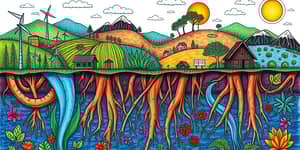
Ecosystem services are the myriad ways in which nature underpins human well-being. They fall into four broad categories, each vital for different aspects of our lives and economies.
Consider coastal wetlands: they provide fish and shellfish (provisioning), buffer storm surges (regulating), support nursery habitats (supporting), and attract tourists (cultural). Accounting for these services shifts wetlands from overlooked areas into high-value assets.
Assigning monetary and non-monetary values to ecosystem services enables policymakers and investors to compare natural capital against built infrastructure. These approaches form the bedrock of robust valuation techniques designed to bridge the gap between ecology and economics.
Non-monetary and participatory approaches complement these methods. Biophysical indicators—species richness, water quality metrics, greenhouse gas fluxes—offer critical insights when market data fall short. Deliberative forums and focus groups ensure equity and cultural values are woven into decision making.
Translating theory into tangible figures brings ecosystem services into sharp focus. Below is a snapshot of landmark valuations that transformed policy and investment decisions.
In New York City’s Catskill Watershed, investing in land protection averted an estimated $6–$8 billion filtration plant, demonstrating how nature-based solutions can outperform engineered alternatives in cost and efficiency.
Similarly, wetlands across various coastlines prevent costly flood damage. By mapping floodplains and estimating damage avoided, scientists place a tangible price on these natural buffers, turning them into quantifiable assets on municipal balance sheets.
Frameworks like the United Nations’ System of Environmental-Economic Accounting (SEEA) are pioneering efforts to embed ecosystem services into national accounts. Companies are also adopting natural capital disclosures to measure dependencies and risks, catalyzing innovative market mechanisms such as green bonds and biodiversity offsets.
These integrations foster transparency, drive capital towards conservation and restoration, and create incentives for sustainable practices. In agriculture, farmers are rewarded for maintaining soil health and pollinator habitats through payment-for-ecosystem-services schemes.
Despite progress, obstacles remain in valuing complex and intangible services. Indigenous and local community values often elude standard economic metrics, highlighting the need for participatory, culturally sensitive approaches.
Overcoming these challenges demands interdisciplinary collaboration—ecologists, economists, social scientists, and local stakeholders working in concert. Technology, including remote sensing and AI-driven modeling, offers new pathways to monitor and value services in real time.
Accounting for ecosystem services is more than an academic exercise—it is a moral imperative. Recognizing nature’s true worth and embedding it within our economic systems empowers us to make choices that sustain both people and planet.
By championing policies that reward conservation, investing in nature-based solutions, and embracing long-term economic resilience, we can forge a future where financial statements and environmental realities align. The balance sheet of our world must reflect the vitality of its ecosystems, ensuring generations to come inherit a healthier, more prosperous planet.
References