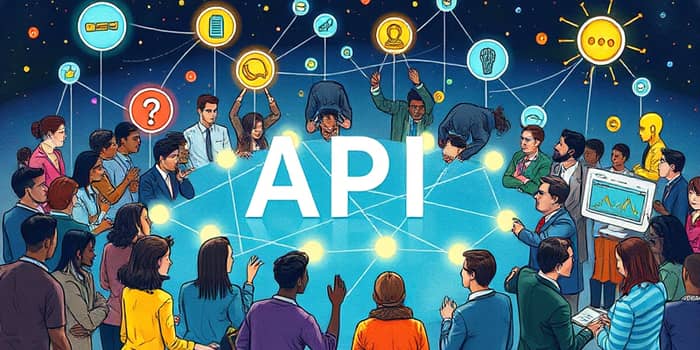
The financial world is undergoing a profound transformation. Open banking stands at the forefront of this change, breaking down traditional barriers and enabling unprecedented collaboration between banks, fintechs, and third-party providers.
Open banking redefines how consumers and businesses interact with their financial data. By providing secure API connections to regulated providers, banks can safely share information that was once locked within closed systems. This paradigm shift is empowered by regulatory frameworks such as PSD2 in Europe and emerging guidelines in the United States, each designed to foster a standardized data exchange environment.
Since its inception, the global open banking market has grown rapidly. Valued between $28 and $31.5 billion in 2024, it is on a trajectory to surpass $306.6 billion by 2035. Europe leads adoption, accounting for 38% of global revenue, while the Asia-Pacific region—driven by Australia, India, and Southeast Asia—shows the fastest growth rates.
A confluence of factors fuels the open banking revolution. Regulatory mandates lay the groundwork, while surge in fintech investments and partnership models propels API usage across diverse platforms.
Open banking unlocks a host of opportunities for all stakeholders in the financial ecosystem. For end users, account aggregation and real-time access to banking data simplify finances and improve decision-making. Businesses benefit from faster onboarding, improved credit scoring, and optimized payment processes that bypass legacy networks.
Secure, encrypted data exchanges coupled with robust compliance standards such as KYC and AML automation ensure that these benefits are delivered with consumer trust at the core.
The path to open banking maturity is not without obstacles. Data privacy and security remain paramount concerns, requiring institutions to invest heavily in cybersecurity and encryption. Additionally, fragmented regulatory approaches across regions create complexity for global players trying to deliver uniform API experiences.
Legacy infrastructures pose another hurdle, as established banks must retrofit outdated systems to support modern APIs. Building consumer awareness and trust is equally critical; users need to understand the value of sharing financial data and feel confident about its protection.
Collaboration models vary widely, but each aims to leverage unique strengths across the ecosystem. Traditional banks partner with fintech startups to co-develop products, while unified API marketplaces enable plug-and-play access for a spectrum of developers.
This culture of cooperation accelerates go-to-market timelines and democratizes financial services across geographies.
The next wave of open banking will extend beyond traditional banking services into the broader realm of finance. Key trends include real-time payments, which promise faster and more secure transfers, and AI-powered advisory platforms offering personalized insights and fraud detection.
Open finance will expand data sharing to encompass insurance, investments, and pensions, creating a holistic financial data ecosystem. API call volumes are set to surge by 427% from 2025 to 2029, reaching 722 billion calls annually, underscoring the massive scale of future integration.
Different regions exhibit distinct adoption patterns. Europe’s PSD2 framework gives it a first-mover advantage, while North America accelerates API usage amidst a patchwork of regulations. Asia-Pacific shows the fastest growth, supported by large populations and committed digital strategies.
As open banking continues its global expansion, stakeholders have a unique opportunity to reimagine financial services. By cultivating trust, investing in resilient infrastructure, and fostering inclusive partnerships, the industry can deliver more equitable and personalized solutions.
The collaborative spirit driving open banking is set to shape a future where consumers and businesses alike benefit from seamless data sharing, innovative products, and enhanced financial control. Embracing this horizon promises not only growth for organizations but also meaningful impact on millions of lives worldwide.
References