Precision agriculture has emerged as a transformative force in modern farming, combining cutting-edge technology with proven agronomic practices. By harnessing data and automation, it aims to maximize yields while conserving resources and protecting the environment.
In this comprehensive article, we explore the core technologies, operational workflows, benefits, challenges, and future trends that define this revolutionary approach to agriculture.
At the heart of precision agriculture lies a suite of interconnected tools that collect, analyze, and act on field-level information.
Precision agriculture unfolds in a systematic cycle of observation, analysis, and intervention. It begins with real-time data collection across spatially distinct zones of a field.
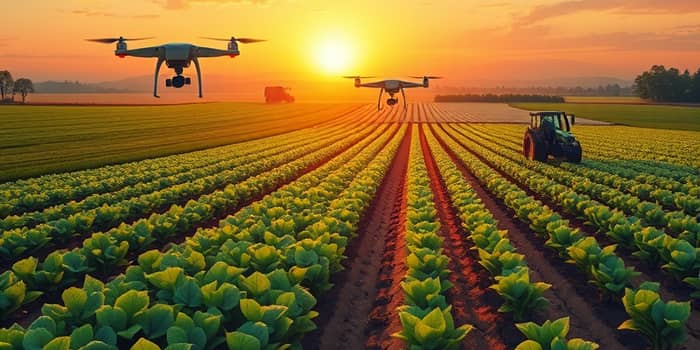
Ground sensors measure soil moisture and nutrient levels, while drones and satellites supply multispectral imagery revealing plant health variations. GPS-enabled machinery then applies inputs variably, targeting only areas that need attention.
This cyclical approach ensures that interventions are not just informed, but dynamically adapted to evolving field conditions.
Precision farming offers substantial ecological advantages by reducing waste and minimizing negative externalities.
Reduced chemical runoff protects water bodies from contamination, while targeted irrigation systems can cut water use by up to 40%. Precise nutrient management also lowers nitrous oxide emissions—a potent greenhouse gas—contributing to a smaller carbon footprint.
Furthermore, by optimizing field operations with site-specific interventions, farmers promote biodiversity. Non-treated buffer zones and integrated pest management reduce reliance on broad-spectrum pesticides, fostering healthier ecosystems.
Adopting precision agriculture can yield impressive financial returns. Case studies report yield increases of 15–20% and input cost reductions of 10–30% in fertilizer and chemical expenditures.
Equipment and software investments typically pay back within three to five years, driven by:
Despite its promise, precision agriculture faces several obstacles.
High upfront costs for machinery and software platforms can be prohibitive, particularly for smallholders. Additionally, farmers require advanced digital literacy to manage and interpret large, multi-source datasets.
Integrating disparate systems—sensors, drones, tractors, and analytics platforms—remains a technical hurdle, and reliable high-speed internet is not universally available in rural areas. These factors contribute to an adoption gap between large commercial operations and resource-limited farms in developing regions.
Leading agricultural regions illustrate the transformative potential of precision farming.
In the North American Midwest, over 80% of commercial corn and soybean acreage employs GPS guidance and yield mapping, resulting in input savings of up to 25% annually. In Europe, pilot programs in Spain and Italy use drone imagery to detect water stress in olive groves, optimizing irrigation schedules and reducing water consumption by 30%.
Emerging initiatives in Africa and South Asia focus on low-cost sensor kits and mobile-based advisory services, aiming to bridge the technology gap for smallholder farmers.
The next frontier of precision agriculture lies in deeper AI integration and ubiquitous connectivity.
Edge computing will enable sensors and machinery to process data locally, delivering instant recommendations without cloud dependency. Advances in remote sensing promise real-time satellite imagery with centimeter-scale resolution, empowering farmers to react within hours to emerging threats.
ESG reporting requirements and “carbon farming” incentives are creating financial rewards for sustainable practices, further accelerating adoption. The global market is projected to double to over $12 billion by the late 2020s, driven by investments in climate-smart agriculture.
Precision agriculture represents a paradigm shift: from uniform, blanket applications to data-driven, site-specific management. It delivers both economic gains and environmental stewardship, positioning farming for resilience in the face of climate change.
As technologies mature and costs decline, the promise of sustainable, high-yield agriculture is within reach for farms of all scales. Embracing precision techniques today will help feed a growing population while safeguarding our planet for generations to come.
References