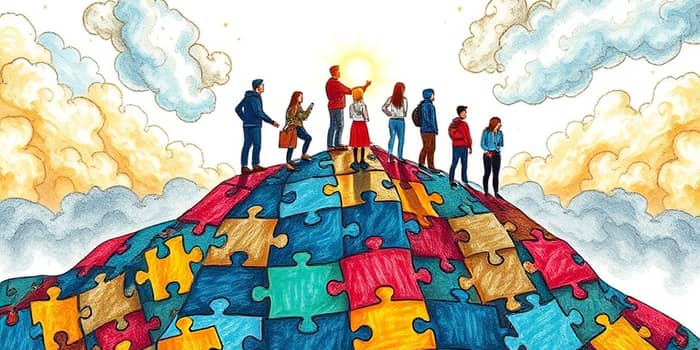
In a business landscape marked by rapid change and heightened uncertainty, leaders must rethink how they view risk and reward. Instead of perceiving risk as a threat to be avoided, forward-looking organizations embrace it as a catalyst for innovation and sustainable expansion.
At its core, risk culture shapes daily decision-making behaviors by embedding norms, values, and attitudes about risk awareness and management throughout an organization. This collective mindset empowers teams to evaluate opportunities thoughtfully rather than avoid them outright.
Calculated growth refers to approaches that balance ambition with prudence. By fostering managed risk taking to enable sustainable growth, organizations can pursue bold initiatives without jeopardizing their stability or reputation.
Organizations that excel in risk management do more than shield themselves from loss—they leverage uncertainty to uncover hidden possibilities. Viewing risk as a strategic advantage enhances resilience, drives competitive differentiation, and boosts long-term performance.
Open communication and transparent reporting ensure that teams feel safe to highlight potential issues, transforming near misses into valuable learning experiences. When leadership rewards constructive candor rather than punishing mistakes, a cycle of continuous improvement emerges.
Implementing a structured risk management process ensures consistency and accountability. Leading frameworks like ISO 31000 and Enterprise Risk Management (ERM) embed risk oversight into every strategic decision.
The evolving risk landscape demands new capabilities. From AI-driven cyber threats to climate-related disruptions, organizations must stay ahead by integrating risk management with strategic planning.
Adopting a suite of tried-and-true tactics allows companies to embed risk awareness into their DNA. From contract reviews to scenario planning, these practices bridge theory and execution.
Even the most robust frameworks can falter if cultural misalignments persist. Beware of:
Misaligned Incentives: Reward structures that encourage reckless behavior can undermine controls, as seen in high-profile scandals.
Organizational Silos: Poor cross-functional collaboration leads to blind spots and fragmented risk insights.
To truly reimagine risk and reward, organizations must weave risk management into their core values. Leadership must champion transparency, encourage diversity of views and continuous improvement, and model thoughtful decision-making.
Empowerment and ownership at every level create a shared sense of responsibility. When employees feel confident that their voices matter, they are more likely to identify emerging risks and propose innovative solutions.
Calculated growth is not an oxymoron. By fostering a positive risk culture—one that values ethical conduct, open dialogue, and adaptive frameworks—organizations can transform uncertainty into a source of competitive advantage.
As we look to the future, the most resilient companies will be those that view risk not as an obstacle, but as a dynamic ingredient in their recipe for sustained success. By reimagining risk and reward, leaders can cultivate a culture that thrives on informed boldness and strategic foresight.
References