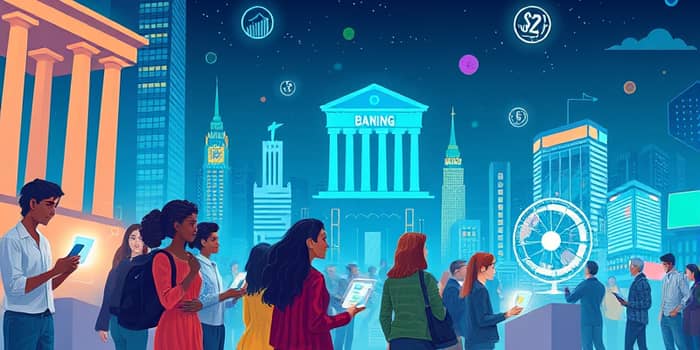
In today’s rapidly evolving financial landscape, institutions are no longer judged solely on rates or fees. They are evaluated by the richness of the experiences they deliver. From the first digital interaction to post-service support, customers expect more than transactions—they demand stories, emotions and lasting memories. This shift has ushered in the experience-driven era of modern banking, where each touchpoint can become a defining moment of connection.
Financial leaders now face the challenge of reimagining core operations, embedding technology and culture in every customer journey. By embracing the principles of the experiential economy, banks and fintechs can foster loyalty and growth, forging powerful emotional connections with customers that transcend traditional service models.
The concept of an experience economy was introduced in 1998 by B. Joseph Pine II and James H. Gilmore. They outlined how economic value has shifted through four distinct stages: Agrarian, Industrial, Service, and Experience. In each era, the focus moved from raw materials to tangible goods, then services, and now to emotional, memorable engagements and loyalties that consumers willingly pay a premium to enjoy.
Today’s financial customer is empowered, informed, and under no obligation to remain loyal. Research shows 46 percent of adults are willing to switch banks or use multiple providers to get superior experiences. The modern customer prioritizes speed, simplicity and personalization over sheer product breadth.
Artificial intelligence and automation are at the heart of next-generation financial experiences. Efficient chatbots handle routine inquiries, while emotion-detection algorithms provide predictive issue resolution before complaints arise. Generative AI tools create tailored financial plans, helping customers visualize outcomes and build trust in every recommendation.
Data integration across channels unlocks data-driven personalization and predictive analytics. By consolidating insights from mobile app behavior, branch visits and social interactions, institutions can anticipate needs—offering mortgage advice to a young couple or retirement planning to a mid-career professional just when they ask.
Embedded finance and open banking remove friction. APIs deliver point-of-sale financing within e-commerce platforms, and real-time data portability gives customers the freedom to aggregate accounts and automate savings across institutions. These advances exemplify true omnichannel integration and customer empowerment.
Developing an experience-led strategy begins with mapping every customer touchpoint. From onboarding and identity verification to loyalty programs and proactive insights, each moment must be thoughtfully designed. Cross-functional teams—mixing UX designers, data scientists and branch managers—collaborate to identify pain points and innovate relevant solutions.
Experience-led organizations see benefits such as increased wallet share, higher cross-selling success and lasting loyalty. By empowering employees, aligning metrics with customer outcomes and investing in agile technology stacks, banks can maximize competitive advantage and drive enhanced digital adoption and customer retention.
To justify investments in experiences, institutions track both sentiment metrics and operational KPIs. Voice-of-the-customer feedback blends with performance indicators, creating a comprehensive view of success. Timely insights enable rapid adjustments and continuous refinement of offerings.
Experience-driven initiatives commonly deliver up to ten times the ROI compared to traditional marketing, thanks to emotional bonds and loyalty that translate into repeat business and referrals.
Balancing innovation with trust remains a core challenge. Institutions must navigate regulatory changes, data privacy concerns and legacy system constraints while rolling out new features. A phased approach—featuring pilot programs, customer feedback loops and robust security measures—ensures reliability and builds confidence.
As we look toward 2030, conversational AI, immersive digital experiences and ecosystem partnerships will define industry leaders. Organizations that cultivate a culture of experimentation, measure progress with precision and place customers at the center of every decision will thrive in the next chapter of the digital experience economy.
Financial services are no longer back-office machines—they are dynamic storytellers crafting journeys that resonate on an emotional level. By embedding AI, personalization and seamless connectivity into every interaction, institutions can transform routine tasks into memorable experiences with their brands. The experiential economy offers a roadmap to loyalty and sustainable growth—one where customer-centric finance becomes not just a goal, but a reality for all who choose to innovate.
References