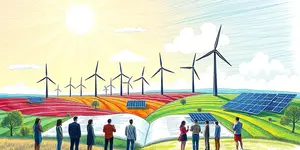
In an era marked by intensifying storms, rising temperatures, and unpredictable weather patterns, infrastructure around the globe is under unprecedented pressure. Governments, engineers, and communities must confront the reality that traditional design philosophies are no longer sufficient to protect critical assets. This article explores how weaving resilience into every stage of infrastructure development can safeguard lives, economies, and ecosystems for decades to come. It unveils strategies, innovations, and case studies that chart a path toward a climate-ready built environment.
Climate resilience refers to the capacity of physical systems to anticipate, absorb, and adapt to adverse climate events while maintaining essential functions. This approach moves beyond mere survival to emphasize comprehensive long-term performance under evolving conditions. By prioritizing resilience, planners can reduce the frequency and severity of disruptions to water supply, energy delivery, and transportation networks, thus securing public safety and economic stability. The ultimate goal is to foster communities that thrive, not just endure, in the face of uncertainty.
Despite the urgency, most infrastructure projects still rely on historical climate data that fails to reflect accelerating trends. Hazards such as flooding, heat waves, and wildfires are often assessed in isolation, neglecting the risks posed by simultaneous events. Furthermore, aging assets suffer from dynamic, compounding exposures that standard evaluations overlook. These blind spots, coupled with procurement practices that prioritize upfront costs, leave many systems dangerously under-engineered and ill-equipped for future extremes.
The financial toll of extreme events has surged dramatically over the past decades. Annual economic losses from climate disasters jumped from $198 billion in the 1970s to $1.6 trillion in the 2010s. When factoring in cascading and ecosystem impacts, disaster costs now exceed $2.3 trillion each year. Cities alone face a shortfall of trillions, needing $4.5–$5.4 trillion annually for resilient upgrades but securing just $831 billion as of 2021. Beyond dollars, service disruptions—averaging 1.6 million each year—threaten healthcare, education, and livelihoods.
To bridge the gap between ambition and reality, infrastructure must embed resilience from conception through decommissioning. Adopting a life-cycle approach from planning to decommissioning ensures that each phase anticipates future hazards. Systems thinking enables modeling of interdependencies across energy, water, transport, and communications, reducing the chance of cascading failures. Outcome-focused planning shifts the emphasis from compliance to performance, while safe-to-fail design accepts that occasional breakdowns are inevitable but manageable.
Digital twins—high-fidelity, virtual replicas of physical assets—offer unparalleled opportunities for real-time anomaly detection and scenario planning. When paired with AI-powered forecasting and risk assessment, these tools can predict failures before they occur, enabling proactive maintenance. Agent-based modeling and Monte Carlo simulations provide robust projections of interconnected systems under various climate scenarios, while remote sensing and satellite surveillance deliver granular environmental insights at scale.
Despite their promise, these technologies remain underutilized. Rolling them out widely will hinge on aligning procurement policies with long-term gains, training a new generation of data-savvy engineers, and forging cross-sector partnerships that share expertise and investment risk.
International frameworks, such as OECD guidelines, advocate for a holistic, monitoring-focused approach throughout the project lifecycle. Yet only 66% of OECD countries define resilience outcomes for projects, and a mere 23% regularly track progress. At the national level, Canada’s adaptation strategy exemplifies transparency through interim reports and evolving targets. To close massive funding gaps, stakeholders are exploring innovative instruments—sovereign resilience bonds, debt-for-adaptation swaps, and resilience ratings integrated into credit assessments.
California’s recent allocation of $100 million for fire-resilient, multifamily, low-income housing underscores the power of targeted investment. A forthcoming state fire code mandates wildfire-resistant materials and landscape planning, setting a national benchmark. In Scandinavia and the Pacific, transport agencies in Sweden and New Zealand monetize resilience benefits—including avoided disruptions, user delays, and societal impacts—ensuring that investment decisions account for long-term value rather than short-term savings.
Building truly climate-resilient infrastructure requires cross-disciplinary collaboration between engineering and finance. Policymakers must set clear, measurable targets and insist on regular progress reporting to adjust policy to evolving risks. Scaling proven tools—digital twins, sensor networks, and AI—will enhance predictive maintenance and risk reduction. Simultaneously, expanding nature-based and hybrid solutions can deliver cost-effective protection while nurturing biodiversity and community well-being.
As climate threats grow, the imperative to future-proof infrastructure has never been clearer. Through sustained investment, forward-looking design, and robust governance, we can transform our built environment into a resilient foundation for generations to come. Embracing innovation and nature-based strategies will not only mitigate risk but also unlock co-benefits that uplift communities, restore ecosystems, and drive sustainable development across the globe.
References