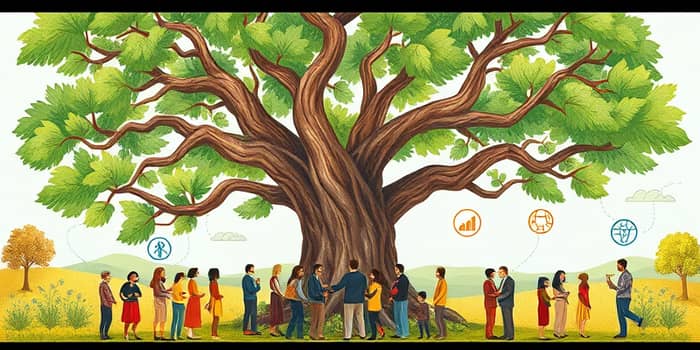
In today’s fast-paced world, leadership is often equated with rapid success and financial triumph. Yet, true leaders recognize that the most meaningful achievements extend far beyond quarterly results. By embracing legacy leadership, individuals can shape organizations and communities in ways that endure long after they move on. This article explores foundational principles, practical stages, and real-world applications for creating an influence that resonates through generations.
Legacy leadership prioritizes long-term influence rather than quick wins, focusing on decisions that shape the future. Instead of chasing fleeting financial gains, legacy-driven leaders invest in resilience, continuity, and shared prosperity. This approach demands a shift in mindset: from optimizing short-term metrics to nurturing sustainable growth and collective well-being.
At its core, legacy leadership involves fostering environments where teams thrive, empowering successors, and committing to values that guide every decision. It’s about the stories and structures you leave behind, ensuring that your vision continues to inspire and uplift others long after you’re gone.
The journey toward leaving an enduring legacy rests on seven interdependent pillars. These pillars provide a compass for leaders seeking to align their actions with a higher purpose and sustainable outcomes.
The cornerstone of legacy leadership is authenticity. By being genuine and transparent, leaders cultivate trust and loyalty, creating environments where team members feel safe to innovate and speak up. Purpose-driven leadership then channels that trust toward a mission greater than financial targets, fostering commitment and enthusiasm.
A compelling long-term vision provides direction and motivation, inviting every member of the organization to contribute to shared goals. Ethical decision-making ensures that choices stand the test of time, even when faced with pressure to compromise. Through dedicated mentorship and development, leaders fulfill their most critical role: nurturing the next generation of leaders. Empowerment follows naturally, as individuals are invited to contribute meaningfully and take ownership of outcomes. Finally, community engagement and sustainability anchor the legacy in broader societal progress, creating cycles of benefit that reach far beyond the corporate footprint.
Each stage builds upon the previous one. Understanding your identity and values provides the foundation for responsible leadership. As you embrace accountability, you set a tone of excellence that carries through mentorship and system design. Ultimately, these combined efforts yield a legacy that resonates throughout the organization and community.
Real-world examples illustrate how legacy leadership transcends theory. Take Heritage Holdings, a contemporary private equity initiative that embraces a hyperlocal, forever portfolios strategy. By acquiring clusters of regionally essential businesses and preserving original management, they emphasize compounding free cash flow and community vitality instead of short-term flips. Their model demonstrates how aligning capital with local stewardship can yield sustainable returns and robust community relationships.
Similarly, the Mining 2030 Vision initiative reframes legacy in the resource sector. Rather than viewing closure as an endpoint, it integrates responsible closure planning with socio-economic development, ensuring that mining communities thrive long after operations cease. This holistic approach requires early governance frameworks, adequate provisioning, and sincere community engagement—illustrating how sustainable systems and structures safeguard both corporate resilience and social well-being.
By tracking both qualitative and quantitative indicators, organizations can assess how well they’re achieving enduring impact. Metrics such as leadership bench strength, retention rates, and community satisfaction scores complement financial performance, painting a richer portrait of overall health.
Leadership for legacy is not a departure from success—it’s its highest expression. When leaders align authenticity, purpose, and vision with ethical choices, mentorship, and community engagement, they create value that outlasts balance sheets. By following the five stages, implementing sustainable practices, and measuring diverse outcomes, every leader can craft an enduring legacy. The true reward lies in knowing that your influence continues to uplift individuals, organizations, and communities for generations to come.
References