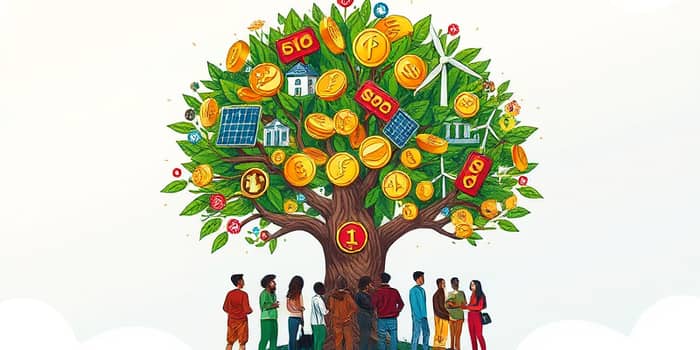
In an era defined by climate change, resource scarcity, and social inequities, finance is undergoing a profound evolution that promises to reshape our collective future.
Sustainable finance represents a transformative shift in how capital is allocated, integrating environmental, social, and governance considerations into every investment decision.
Unlike traditional finance, which focuses primarily on immediate financial returns, sustainable finance seeks to balance profit with the planet and people. This approach provides a pragmatic response to urgent global challenges such as climate change, resource depletion, and social disparities.
At its core, it aims to support economic growth while reducing environmental pressures, addressing social inequities, and ensuring long-term sustainability. Whether through ESG investing, green bonds, or impact investing, the movement is gaining momentum across institutions, companies, and individuals.
The foundation of sustainable finance rests on several key components, each playing a vital role in reshaping the financial ecosystem.
Financial institutions worldwide are launching products that steer capital toward sustainable outcomes. Green bonds, for example, channel funds into renewable energy, pollution reduction, and sustainable land use. These bonds often come with competitive interest rates and transparency on how proceeds are used.
Green deposit programs reward savers for supporting environmentally focused projects. Below is a snapshot of leading banks and their offerings:
Green loans and financing help homeowners and businesses invest in energy-efficient upgrades, solar installations, and low-carbon operations. These loans often feature lower rates, extended terms, and additional funds to cover project-related costs, making it easier to pursue long-term financing for impactful projects.
Individuals can also adopt practices that reduce expenses, mitigate environmental impact, and promote social good. Simple habits can make a big difference:
By embracing the “reduce, reuse, recycle” ethos in personal finance, individuals can minimize wasteful spending and build financial resilience. Setting a “green budget” ensures that every dollar spent contributes to a healthier planet and society.
Leading firms are demonstrating that sustainability and profitability can go hand in hand. Prudential Financial, for instance, has committed over $39.6 billion to sustainable investments, with a goal to become a net zero asset owner by 2050. Their strategy is built on three pillars:
1. Health and Financial Protection: Creating simple, accessible offerings that enhance financial security and promote community well-being.
2. Just and Inclusive Transition to a Low-Carbon Economy: Decarbonizing the investment portfolio and supporting sustainable growth across markets.
3. Sustainability-Linked KPIs: Embedding environmental and social targets into leadership performance metrics by 2026.
Prudential’s comprehensive approach is reflected in robust governance and a track record of over 175 years of global partnerships. By publishing detailed sustainability reports and embedding ESG criteria into risk management, they exemplify ethical governance practices that foster trust and resilience.
Similarly, Progressive Insurance integrates ESG considerations into its risk assessment and investment decisions, believing that companies with strong sustainability profiles often deliver better long-term performance. Their Enterprise Risk Management program evaluates environmental and social factors alongside traditional financial risks.
The shift toward sustainable finance is more than a trend—it is a movement with measurable impacts:
As more institutions and individuals commit to sustainable financial practices, the collective impact grows exponentially. From reducing greenhouse gas emissions to promoting social equity, smart finance becomes a powerful lever for change.
Looking ahead, the integration of AI and data analytics promises to refine ESG assessments and unlock new opportunities for investors. Enhanced governance frameworks will ensure that ethical considerations remain at the forefront of financial decision-making.
Ultimately, sustainable finance is not just about capital—it is about charting a course toward a more equitable and resilient society. By aligning financial goals with environmental stewardship and social responsibility, every participant—be it a global corporation or a family budgeting at home—plays a role in shaping a better world.
Embrace the principles of progressive prudence, and let your financial choices reflect the future you wish to see: one where prosperity and sustainability thrive together.
References