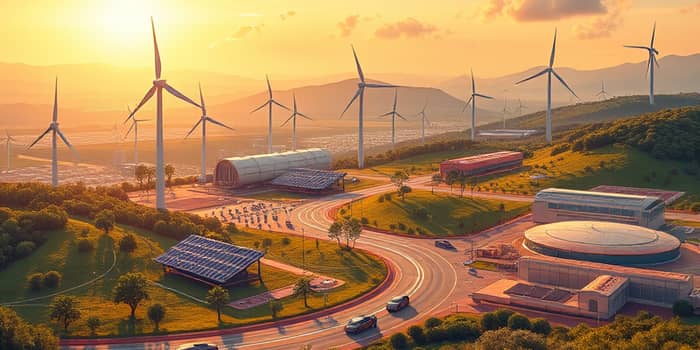
In recent years, green technology has evolved from an environmental afterthought into a strategic economic powerhouse. Driven by sweeping investment trends, policy support, and innovation breakthroughs, this sector now shapes global competitiveness, job creation, and resilience.
Once viewed as a niche environmental initiative, green technology is now a central pillar of industrial strategy for governments and corporations. In 2025, global energy transition investment reached $2.3 trillion—an 8% increase from the year before—underscoring the sector’s rising significance.
Far from a marginal initiative, green tech has become a multi-trillion-dollar capital reallocation project that drives growth across energy, transportation, agriculture, and manufacturing.
According to IMF analysis, doubling green patent filings can boost GDP by roughly 1.7% after five years—and in optimistic scenarios, as much as 6–7%. Green innovation behaves like a general-purpose technology with broad spillovers, fueling advancements in AI, materials science, and digital infrastructure.
Green tech is transforming rural and regional economies. AI-driven climate solutions could generate 1.5 million new jobs by 2030, with a significant share in regional hubs outside major cities.
Large-scale wind farms and solar installations often trigger around $50 million in local infrastructure spending, from roads to grid interconnections. Regions with strong sustainability profiles attract up to 25% more investment and, in some cases, report over 200% higher business growth compared to peers.
Adopting green technology can cheaper capital through green financing. Companies with clear sustainability strategies access green bonds and sustainability-linked loans at lower interest rates, improve credit ratings, and secure government subsidies or tax credits. These advantages strengthen balance sheets and unlock further innovation.
By mitigating financial constraints and enhancing cash flow, green tech transforms compliance costs into competitive assets.
The scale and diversity of green tech funding reflect a maturing market. Record inflows in both venture capital and project finance signal sustained commitment to decarbonization and resilience. These are record high investment flows marking a pivotal moment in economic history.
Definitions vary: narrow scopes focus on generation technologies, while broader measures include electrified transport, hydrogen, carbon capture, and circular-economy models.
Venture activity is increasingly concentrated on highly scalable, infrastructure-linked solutions that bridge pilot projects to full commercial deployment. Key focus areas include:
Additional growth is expected in circular-materials, precision agriculture, water resilience, and waste-to-energy solutions.
Green technology is no longer just an environmental imperative—it is a catalyst for sustainable and inclusive economic transformation. By aligning public policy, private capital, and innovation ecosystems, we can harness this shift to build resilient industries and communities.
Investors, entrepreneurs, and policymakers must collaborate to scale proven technologies, fund breakthrough research, and create frameworks that reward long-term value over short-term gains.
As we fund the future today, we lay the groundwork for a more prosperous, equitable, and climate-resilient world.
References