In an era where fiscal responsibility and environmental stewardship must go hand in hand, municipalities, developers, property owners, utilities, communities, and employers are discovering a transformative approach: green infrastructure. This strategy goes beyond traditional engineering, harnessing the power of natural systems to deliver measurable financial returns alongside ecological resilience.
Viewed through the lens of investors and civic planners alike, green infrastructure emerges as a profit-enabling asset class for stakeholders, capable of generating cost savings, economic growth, and social benefits.
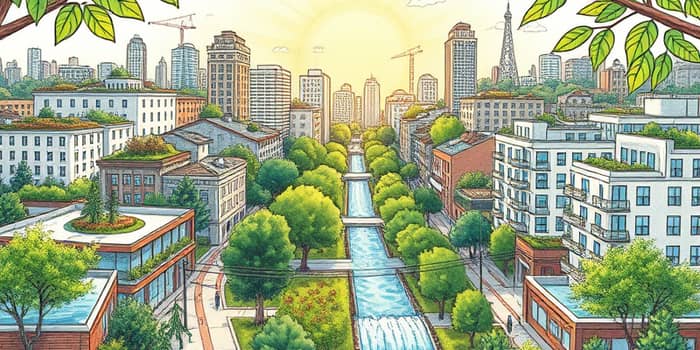
At its core, green infrastructure leverages natural or semi-natural systems—from soils and vegetation to wetlands and urban forests—to manage stormwater, improve air quality, and enhance urban resilience. Leading authorities describe it as:
Examples range from rain gardens, green roofs, and permeable pavements to bioswales, stormwater ponds, and vegetated buffers—all contributing to a healthier built environment.
Green infrastructure delivers value to a wide array of beneficiaries. Key groups that stand to profit include:
Each stakeholder can tap into economic, environmental, and social returns by embedding green infrastructure into planning and investment decisions.
One of the most compelling financial arguments for green infrastructure is its ability to reduce the burden on traditional sewer and wastewater systems. By increasing infiltration and capturing stormwater on-site, communities can delay or avoid expensive gray infrastructure expansions.
For example, in a combined sewer service area, green infrastructure investments yielded an estimated $44 million in infrastructure cost savings compared to new tunnel construction. This lower-cost alternative or complement to pipe-and-tunnel expansions illustrates how strategic natural solutions can optimize existing assets.
Green space is a powerful amenity. Parks, tree-lined streets, and landscaped buffers enhance neighborhood desirability, attracting private investment and boosting tax bases. Studies show that lot improvements and tree plantings in urban areas can raise surrounding housing values by as much as 30%.
In one planning district, projected green infrastructure enhancements were linked to a $667 million increase in property values, while Philadelphia’s vacant lot greening generated a combined $16 million gain through vegetation and land improvements. Such outcomes demonstrate how green infrastructure functions as a neighborhood capital improvement and growth, transforming underutilized spaces into vibrant assets.
Implementing and maintaining green infrastructure creates a spectrum of career opportunities. From design and engineering roles to construction crews and maintenance teams, these projects become engines of economic development.
Data indicate that full implementation can support over 500 green maintenance jobs and an average of 160 construction positions each year. In Pennsylvania, green infrastructure occupations grew by 9.2% between 2011 and 2019—outpacing statewide growth in all sectors—and 52% of workers earn more than $31,200 annually without a high school diploma. By acting as a job-creation engine with local benefits, green infrastructure promotes both workforce diversity and equitable career ladders.
Vegetation-driven strategies such as green roofs and urban forests mitigate the urban heat island effect, shading buildings and reducing cooling demands. One major initiative yielded 16,500 megawatt-hours of annual energy savings—translating to $1.5 million to $2.1 million in reduced utility expenses.
By cutting peak demand and smoothing energy consumption patterns, green infrastructure delivers ongoing operational expenses over time that positively impact both public budgets and private bottom lines.
Regulatory frameworks increasingly require stormwater management and water quality controls. Green infrastructure captures, retains, and infiltrates billions of gallons of runoff annually, reducing peak flows, preventing combined sewer overflows, and filtering pollutants.
With 14.8 billion gallons of stormwater captured per year and reductions of up to 15 million pounds of total suspended solids and 54,000 pounds of phosphorus, these natural systems serve as a compliance strategy and asset management solution—helping developers and municipalities meet stringent environmental mandates.
Beyond direct financial gains, green infrastructure supports groundwater recharge—up to 4 billion gallons annually—enhances carbon sequestration, and improves public health. One program sequestered 73,000 tons of CO2 (equivalent to taking 14,000 vehicles off the road) and generated $1.4 million in social cost benefits.
Urban trees and vegetation absorb pollutants—including nitrogen dioxide, ozone, particulate matter, and sulfur dioxide—yielding over $9.1 million in annual health care savings. By offering direct and indirect climate value and fostering lower healthcare costs and healthier, more productive communities, green infrastructure amplifies its role as a comprehensive investment in resilience.
Green infrastructure transcends the conventional divide between ecology and economy. By channeling the inherent strengths of natural systems, it offers a holistic blueprint for cost savings, revenue enhancement, job creation, and community well-being.
For decision makers seeking durable returns and lasting resilience, investing in green roofs, rain gardens, permeable pavements, and urban forests is more than an environmental imperative—it is a strategic economic choice. As municipalities, developers, and businesses integrate these solutions, they lay the groundwork for a prosperous, sustainable future.
References