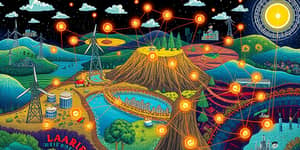
The world’s ecosystems quietly provide essential services worth trillions of dollars each year, yet these contributions are often overlooked. Regenerative agriculture offers a pathway to recognize and harness this hidden ecosystem services and wealth.
By assigning measurable value to ecological processes, we can redesign investments and policies that reward stewardship rather than degradation. It is a transformative approach with profound implications for food security, climate resilience, and economic growth.
As James Salzman observed, “Jump-started economics research... giving natural benefits more weight in policy.” This insight drives the need for rigorous valuation frameworks and innovative financing models.
Ecosystem services encompass the benefits nature provides, ranging from pollination and water purification to climate regulation and cultural enrichment. Recognizing these services is the first step toward sustainable decision-making.
In 1997, a landmark study estimated these services at over $33 trillion per year—nearly twice the global GDP of that time—illustrating how dependent our economy is on functional ecosystems.
Without proper valuation, critical services remain undervalued, leading to ecosystem decline. Robust pricing mechanisms can reveal true costs, guide efficient resource allocation, and incentivize restoration.
Regenerative agriculture integrates holistic land management techniques such as cover cropping, no-till farming, and rotational grazing. These practices rebuild soil organic matter, enhance water infiltration, and improve biodiversity.
restores soil health and biodiversity while reducing reliance on synthetic inputs. By nurturing living soils, regenerative farms capture carbon, filter water, and create habitats for pollinators and beneficial insects.
This model exemplifies a double-bottom line investment approach, delivering financial returns alongside ecological gains. In targeted landscapes, agriculture, forestry, and conservation coalesce into resilient mosaics that support communities and ecosystems alike.
Policy developments, such as the USDA FY2026 Regenerative Pilot Program and Vermont’s PES scheme, demonstrate growing institutional support. These initiatives provide technical assistance and financial incentives, offsetting transition costs for farmers.
Farmland LP, a pioneering investment manager, acquired $85 million of conventional farmland and implemented regenerative practices. Over time, the fund measured significant ecosystem service gains and financial returns.
Using tools like the Ecosystem Valuation Toolkit and advanced GHG accounting, investors can quantify nature’s hidden financial value. Comparable benchmarks include coral reefs valued at $350,000 per hectare per year and open ocean services at $490 per hectare per year.
The concept of Gross Ecosystem Product (GEP) further translates biophysical outputs—such as crop yields and water purification—into monetary terms, creating a common language for policy and investment.
Each method involves trade-offs between precision and practicality. Non-market values—cultural heritage and biodiversity—remain challenging to monetize but are critical for holistic assessments.
Payments for ecosystem services (PES) transform environmental outcomes into revenue streams. Farmers receive compensation for actions that sequester carbon, restore habitats, or improve water quality.
These mechanisms transform ecosystem benefits into tradable assets and attract private capital. By aligning incentives across stakeholders, we unlocks scalable regenerative solutions that benefit investors, farmers, and ecosystems alike.
Forward-thinking corporations and impact investors are applying placing nature at the heart of supply chains, securing sustainable sourcing and enhancing brand resilience through authentic environmental stewardship.
Despite growing momentum, significant barriers persist. Smallholder farmers often lack access to capital and technical expertise required for regenerative transitions, and fledgling credit markets need transparent governance.
Collaboration between NGOs, governments, and private investors is essential. Co-created programs can provide risk-sharing, standardized verification, and capacity-building to accelerate adoption.
In parallel, integrating ecosystem valuations into national accounts—via GEP and UN SEEA frameworks—will mainstream natural capital considerations in macroeconomic planning and corporate reporting.
Framing regenerative agriculture as a public health investment highlights its role in reducing diet-related illnesses and ensuring clean water supplies, creating a compelling narrative for broader support.
The regenerative deal offers a compelling path forward: valuing nature as an asset class and aligning financial incentives with ecological restoration. Embracing this approach unleashes resilient agriculture and thriving landscapes.
By collaborating across sectors, we can build a future where prosperity grows hand-in-hand with environmental health. It is time to invest in nature’s genius and secure a vibrant planet for generations to come.
References