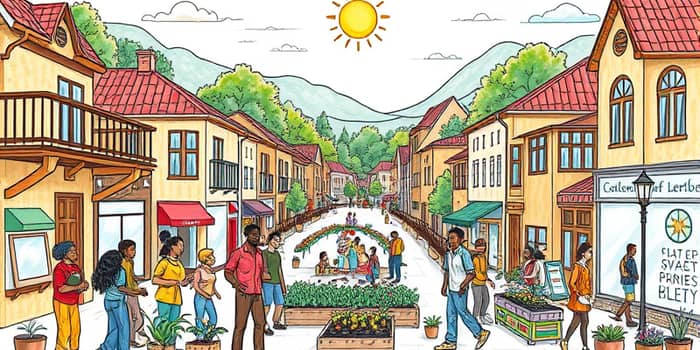
At the intersection of community finance, local economic development, and place-based impact investing lies an opportunity to reshape the future of underserved neighborhoods. When financial resources are directed toward local aspirations, they can spark a cycle of shared prosperity, stronger civic institutions, and resilient economies.
By centering resident engagement, aligning public, private, and philanthropic resources, and measuring success beyond dollars, community-driven investing can deliver public, private, and philanthropic capital in ways that build wealth and foster equity.
Community-driven investment channels resources into people and places often overlooked by mainstream finance. It values community needs, aspirations, and robust resident engagement over purely financial returns. By prioritizing local priorities—such as affordable housing, small business support, and community facilities—this approach aims to generate a spectrum of benefits.
Local economic development (LED), as defined by the World Bank, is a strategically planned partnership among local government, private sector, and civil society. It seeks to build the economic capacity of a local area and improve quality of life for all residents. Place-based impact investing tailors capital to a specific region’s strengths and challenges, mobilizing both local savings and institutional funds.
Decades of structural inequities—rooted in discriminatory lending, redlining, and disinvestment—have created persistent wealth gaps in low-income urban neighborhoods and remote rural communities. By directing capital locally, communities can reclaim agency over their economic destinies and address the legacies of exclusion.
Strengthening local economies boosts municipal budgets, supports public services, and enhances residents’ purchasing power. Investments in infrastructure, education, and health not only elevate living standards but also influence social determinants of health, reducing poverty and improving community well-being.
Community-driven returns encompass multiple dimensions. A comprehensive framework captures:
An ecosystem of participants collaborates to mobilize capital and expertise:
By working together, these actors create pipelines of investable community projects that align financial objectives with social and civic advancements.
Local Economic Development unfolds as a multi-stage process. Each step generates projects attractive to community-driven investors:
Through this structured approach, communities transform insights into tangible ventures, from community solar installations in rural areas to main-street revitalization in urban neighborhoods.
In a small Appalachian town, a partnership between the county government, local credit union, and philanthropic fund launched a community-owned broadband network. Affordable internet access unlocked opportunities for remote work and online education, boosting household incomes and reducing outmigration.
Meanwhile, in a Midwestern city, a place-based pension fund set aside 5% of its assets for local affordable housing projects. By blending public grants, private equity, and resident investments, the initiative created over 200 mixed-income units and funded small business storefronts—delivering both market-rate returns and lasting social impact.
To deepen community-driven returns, stakeholders should:
By weaving together these principles, investors and community leaders can co-create sustainable models that generate robust financial, social, and civic returns.
Community-driven investing is not a one-off intervention but a long-term commitment to shared prosperity. When capital aligns with local agency and context, it becomes a powerful force for equity, resilience, and generational change.
References