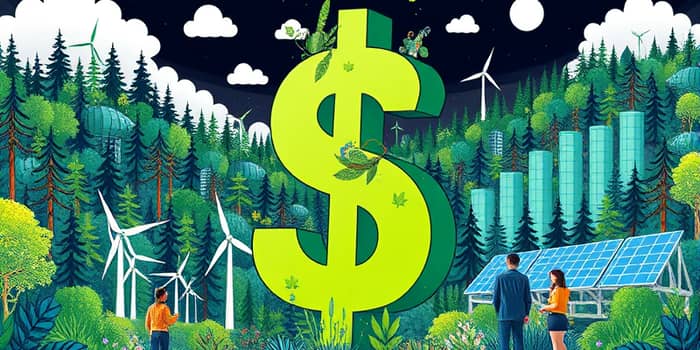
As global capital flows into climate solutions, understanding the genuine impact of sustainable investments is more critical than ever. With $56 billion poured into climate tech in early 2025 and $104 billion in carbon tax revenues, the stakes for authentic change are high. Investors must discern true environmental value from superficial labels.
The year ahead promises to redefine how capital responds to climate imperatives. From AI-enabled risk assessment to nature-based solutions, key developments will guide investment decisions.
Green bonds have emerged as a cornerstone of sustainable finance. Rather than mere rebranded debt, these instruments aim to direct capital into carbon-reducing infrastructure projects like wind farms and clean transport.
Research shows that corporate issuers see measurable drops in greenhouse gas intensity after green bond issuances. New entrants benefit from lower financing costs, making the first issuance particularly transformative. Repeat issuers reinforce credibility by adhering to voluntary frameworks.
Amid skepticism, robust measurement, reporting, verification (MRV) remains the linchpin of authenticity. Digital platforms, satellite monitoring and sensor networks enhance transparency, ensuring capital supports verifiable emissions reductions.
However, challenges persist. MRV-as-a-Service models must scale to match project proliferation, while standard bodies like Verra and Puro.earth evolve methodologies. Investors prize real-time data to de-risk portfolios and validate environmental outcomes.
To harness the full potential of sustainable ventures, investors should prioritize companies with integrated MRV, ensuring every dollar advances climate goals. Portfolios blending modular clean tech, adaptation solutions and nature-based assets provide diversification and resilience.
Key considerations include:
By focusing on metrics that tie directly to environmental outcomes—like tons of CO₂ avoided or hectares of restored wetlands—investors move beyond labels toward measurable impact.
As the politics of cleantech give way to the economics of sustainable growth, discerning investors will seek verifiable, outcome-driven opportunities. Whether through green bonds catalyzing new capital or MRV innovations boosting transparency, the green dollar holds immense promise when rooted in real value.
Decoding this promise requires rigorous analysis, adaptive strategies and a commitment to genuine environmental stewardship. In 2026 and beyond, success belongs to those who invest with both heart and rigor, transforming capital into lasting climate solutions.
References