For decades, real GDP per capita has dominated policy debates as the prime indicator of national well-being. Yet as societies evolve, so must our measures of success. This article explores why traditional growth metrics fall short and how we can embrace a vision of prosperity that nurtures both people and planet.
Following World War II, governments and international organizations elevated the growth rate of real GDP as the definitive gauge of economic health. Rising output promised expanded education and healthcare access, poverty reduction, and greater material comfort. Financial markets still react sharply to quarterly GDP surprises, unemployment figures, and inflation data, treating them as proxies for future corporate profits and fiscal sustainability.
Under this paradigm, a narrow set of indicators commanded attention and resources:
While these core indicators of macroeconomic health remain vital, they capture only part of the human experience.
Economic growth is primarily quantitative—an increase in goods and services. Qualitative improvements in human well-being require broader metrics. The Human Development Index (HDI) combines life expectancy, education, and income to reveal that high GDP does not always equate to high human development. Consider nations with similar GDP per capita but divergent health and literacy outcomes; growth alone is an incomplete story.
Key measures of inclusive development include:
Below is a comparison of how traditional and broader metrics differ in focus:
Tim Jackson’s landmark work, Prosperity Without Growth, warns of the finite ecological boundaries and resource limits we face. Exponential GDP growth strains planetary systems—depleting minerals, eroding biodiversity, and accelerating climate change. Meanwhile, social indicators in high-income countries can stagnate or worsen: rising inequality, mental health crises, and a loss of communal bonds.
Jackson identifies a structural dilemma: modern economies depend on expansion to sustain jobs, pensions, and financial stability. Without growth, unemployment and social unrest may surge; with it, environmental crises intensify. Attempts at decoupling economic activity from ecological harm have yielded only partial, relative successes—total impact continues to rise alongside output.
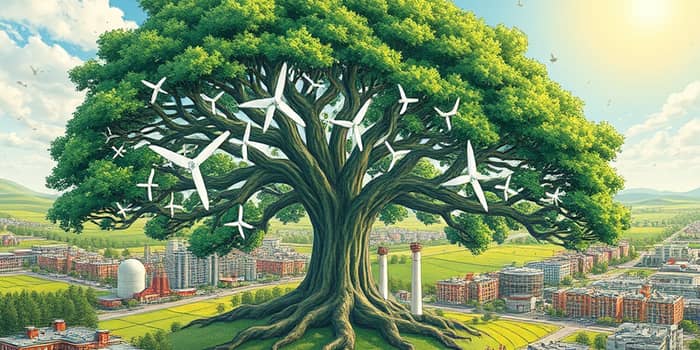
Redefining success demands a shift in priorities and policies. We must cultivate an economy that thrives within ecological limits and fosters human potential. This means investing in public goods, redesigning financial systems, and nurturing community resilience.
Core pillars of a flourishing economy include:
Policy innovations might feature carbon pricing that funds green infrastructure, universal basic services to decouple welfare from employment, and new measures of national progress that integrate well-being and sustainability.
Cities from Copenhagen to Curitiba illustrate how urban planning can enhance quality of life while reducing carbon footprints. Community energy cooperatives prove that citizens can own and benefit from renewable power. Education systems that emphasize critical thinking, cooperation, and ecological literacy prepare future generations for a world beyond endless growth.
Businesses, too, can lead by adopting meaningful participation in community and society, shifting from volume-driven models to purpose-driven strategies. Investors are increasingly channeling capital toward social bonds, green assets, and impact funds that value long-term resilience over short-term returns.
The journey from growth to flourishing is neither simple nor risk-free, but it is essential. By broadening our metrics beyond GDP and aligning economic activity with ecological and social priorities, we can forge a future where prosperity is defined by health, equity, and harmony with nature. Let us hold a vision of success that transcends mere output—a world where both people and the planet can truly flourish.
References