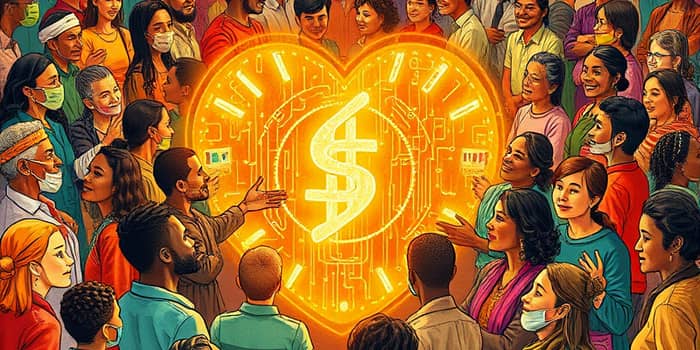
We stand at a pivotal moment in the history of capital. As vast sums transfer across generations and technology reshapes financial systems, the essence of wealth has expanded beyond mere numbers. Today, true prosperity emerges from empathy, purpose, and shared experiences. This transformation invites us to explore how capital can be both a tool for personal security and a powerful force for social and environmental good.
Wealth is no longer defined solely by dollar amounts on a balance sheet. Modern perspectives emphasize its relational, values-driven, and experiential nature. Families and individuals now ask deeper questions: What does it mean to feel secure? How much is enough to live with dignity and joy?
Financial planning rooted in humanity begins with the big questions. Professionals guide clients through conversations about legacy, impact, and personal fulfillment. Choosing an approach that honors identity and ambition can transform capital into a source of meaning.
By reframing success as a balance between security and significance, advisors empower clients to craft legacies that reflect their deepest convictions.
The era of return-only investing is giving way to integrating social and environmental impact alongside financial goals. The integrated capital framework harmonizes three pillars: impact, return, and risk. Investors can deploy a spectrum of instruments—grants, loans, equity, guarantees—to pursue both profit and purpose.
Investors using this toolkit quantify ambition in both financial and non-financial terms. They model cash flows, set clear benchmarks for environmental or social returns, and monitor progress with the same rigor applied to traditional metrics.
Reimagining portfolios in this way invites stakeholders to view capital not as an end but as a means to create sustained value for people and planet.
As automated platforms proliferate, genuine human connection is now a competitive edge. Leading advisors emphasize listening, empathy, and direct access over scripted interactions. By prioritizing personal relationships, they cultivate trust that endures through market shifts.
At firms like Hennion & Walsh, each client is matched with a dedicated team that understands their unique journey. They practice a listen first, start by understanding philosophy to build strategies tailored to individual dreams and concerns. This approach stands in sharp contrast to call centers and impersonal chatbots.
Similarly, independent firms highlight how independence safeguards client interests. Without quotas or proprietary pressures, advisors can deliver unbiased guidance. In this context, trust becomes the most valuable asset, driving long-term collaboration and shared success.
Technology must serve human needs, not replace them. Solutions like Capital One’s chatbot Eno demonstrate how AI can feel warm and approachable. By weaving witty banter and empathetic responses into transactions, Eno transforms banking from a chore into a pleasant experience.
Digital wealth managers such as Moneyfarm blend automated insights with human coaches. Algorithms continuously assess risk and market conditions, while advisors provide guidance on life goals and values. The result is a balanced model of human connection plus smart tech that appeals to all generations.
MX and other innovators push further, arguing that technology should make money more understandable and accessible. By embedding empathy and transparency into digital platforms, they bridge the gap between data-driven tools and human experience.
The United States faces an unprecedented $124 trillion great wealth transfer as Baby Boomers pass assets to younger heirs. These inheritors and self-made entrepreneurs demand a fresh approach. Nearly 54% of Gen Z and Millennials insist that advisors master AI tools, yet they still prioritize human insight over algorithms alone.
Advisors who cater to this cohort must offer integrated digital access, two-way communication, and values alignment. Conversations extend beyond portfolios to lifestyle aspirations, social priorities, and environmental commitments. This dialogue reveals the true drivers of wealth creation and preservation.
Ultimately, the next generation expects their financial partners to champion causes they care about. From climate transition to social equity, they view capital as a force for progress, not just accumulation.
Humanizing wealth demands a paradigm shift: from isolation to connection, from profit-only agendas to purpose-driven collaboration. When advisors blend heartfelt listening with technological prowess, they unlock deeper trust and more profound impact. By embracing integrated capital, nurturing genuine relationships, and empowering the next generation, we can transform capital into a catalyst for human flourishing and planetary health. The future of wealth is not indifferent; it is alive, empathetic, and brimming with possibility.
References