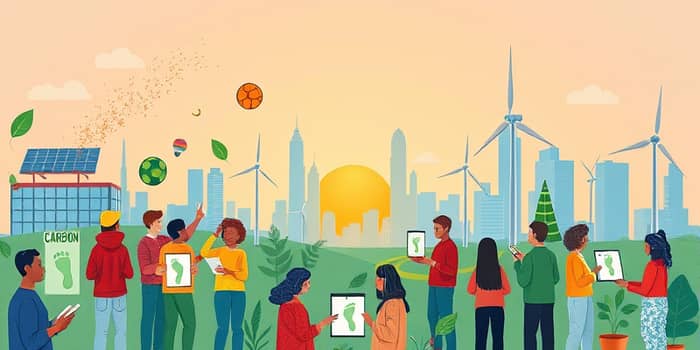
In an era where every decision can accelerate or slow climate change, individuals yearn for clarity and control. This article explores how personalized carbon footprint tech is transforming everyday actions into powerful contributions toward a sustainable future.
For too long, carbon emissions have been measured in broad strokes, leaving individuals feeling powerless. Today, dynamic apps and AI tools can break down Scope 1, 2, and 3 emissions to a personal level, translating global challenges into manageable tasks.
The global push toward sustainability demands that consumers align spending and lifestyle choices with environmental goals. According to recent data, leveraging technology can improve efficiency and cut emissions 80% more efficiently than methods from a decade ago, positioning users at the frontline of climate action.
Recent studies show that consumers account for over 70% of global greenhouse gas emissions through daily habits, yet only a fraction actively monitor their footprint. This gap highlights an untapped opportunity: armed with personalized insights, individuals can spark corporate transparency and drive policy changes at scale.
Empowering consumers with net-zero by 2040 projections for their household emissions connects daily choices to long-term planetary goals. When users see progress measured in real time, the abstract concept of climate change transforms into tangible milestones worth celebrating.
A convergence of advanced tools is making it possible to measure and reduce emissions with unprecedented accuracy and engagement.
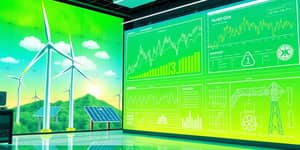
AI platforms analyze spending patterns and lifestyle data to suggest tailored reduction plans, while IoT devices in smart homes and vehicles provide continuous feedback on energy and fuel use. Gamified challenges, community leaderboards, and clear incentives ensure users stay engaged.
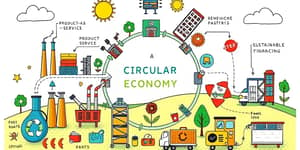
Blockchain-based offset verification is joining the mix, ensuring that every ton of CO2 offset is transparent and traceable. Satellite imagery and AI converge to monitor forest health, connecting personal carbon credits to on-the-ground reforestation initiatives and circular economy shift cutting 9.3 billion tons of emissions.
Moving from measurement to measurable impact involves a clear, guided journey.
By following these steps, a typical user transforms vague sustainability goals into a clear, personalized roadmap. As habits solidify, the technology refines its recommendations to match evolving lifestyles, ensuring progress scales alongside ambition.
Several consumer-facing platforms have emerged to simplify the carbon reduction journey:
Users often report that seeing emissions linked to specific purchases—like a cup of coffee or a package delivery—creates an emotional connection that general statistics cannot replicate. Financial incentives, such as discounts or charitable contributions tied to completed actions, further reinforce positive behavior and nurture a lasting commitment.
Stories from early adopters demonstrate profound results. A graphic designer in Berlin reduced personal emissions by 20% in six months by following AI-driven suggestions and tracking daily progress on a smart home dashboard. A family in California installed rooftop solar panels recommended through a personalized scenario model and now powers 45% of their household energy needs with renewables.
Case studies also illustrate community momentum: a neighborhood in Copenhagen used a shared platform to track group emissions, achieving a combined 25% reduction in household energy use within a year. These collective stories underscore how personalization scales across social groups and accelerates cultural shifts toward sustainability.
On a global scale, if a million users adopted similar tools, the impact would be staggering. Harnessing renewables plus home energy storage and smart grid integration, these individuals could drive enough demand to reshape energy markets and support clean infrastructure investments.
The intersection of AI, IoT, and user-centric design is just the beginning. Emerging technologies such as blockchain-based carbon credits and satellite monitoring promise greater trust and precision. By 2026, we expect home energy storage paired with rooftop solar to become as common as smartphones, enabling consumers to self-generate and manage power.
Innovations such as direct air capture devices and AI-driven agritech will integrate with personal apps, allowing users to compensate for unavoidable emissions by supporting localized carbon removal projects. Imagine selecting a local rainforest restoration program through your carbon app and watching a virtual garden grow as credits are verified in real time.
As these trends converge, individual actions will be amplified by network effects. Technology will continue to evolve, making it easier for anyone to contribute toward a net-zero world without sacrificing comfort or convenience.
Each of us has the power to reshape our carbon footprint through informed choices and the right technology. Start by exploring an app or API integration that matches your lifestyle. Track your progress, share achievements, and invite friends to join the journey.
This journey begins with a single step: download a carbon tracking app, answer a brief survey, and commit to a first micro-action—whether swapping to LED bulbs or reducing single-use plastics. Reward yourself for each accomplishment, share progress with your community, and inspire others to follow.
Remember, turn habits into lasting lifestyle changes is not just a goal, but a shared mission. Demand transparent carbon labels on products, advocate for digital tools in your community, and celebrate every milestone. Together, these steps will pave the way toward a sustainable future—one person, one action, one innovation at a time.
Embrace personalized carbon tracking today and transform data into a force for good. The planet depends on our choices, and technology has given us the tools to make every decision count.
References