As the world races toward a sustainable future, the intersection of artificial intelligence and energy trading is unlocking unprecedented potential. From smart grids to virtual power plants, AI is transforming how we forecast, trade, and integrate renewable resources. This evolution is not just a technological advancement—it’s a catalyst for change in the global green market.
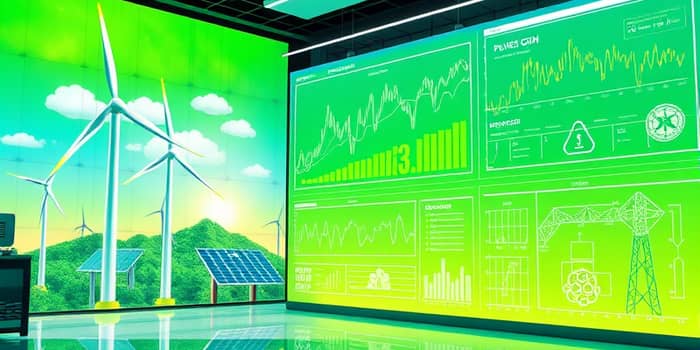
Artificial intelligence has matured into a critical tool for navigating rapid market fluctuations and unpredictable weather. By analyzing historical data, real-time weather patterns, and asset performance, AI systems deliver real-time market insights for trading decisions. Energy traders can now anticipate supply-demand imbalances and optimize bids with a level of precision once thought impossible.
Beyond forecasting, AI-driven platforms enhance smart grid optimization and resilience. Advanced algorithms manage distributed energy resources—wind farms, solar arrays, and battery storage—balancing loads instantaneously to maintain grid stability. Predictive maintenance modules further ensure that turbines and panels operate at peak efficiency, helping operators reduce operational downtime and maintenance costs.
Leading energy companies are already reaping dramatic returns. GE Vernova’s Alpha Trader, for example, delivered an additional $2.5 million in annual revenue for a 250 MW wind farm in just nine months. Across six U.S. sites, it unlocked over $20 million in value, while boosting capacity factors by more than 30%.
Other operators report 15–30% lower imbalance penalties and a 20–40% reduction in manual bidding effort, with AI platforms paying for themselves within 6–12 months. These successes underscore AI’s role in achieving both maximized profitability and operational efficiency.
While the benefits are compelling, AI adoption carries its own challenges. Integrating vast and disparate data sources seamlessly demands careful planning. Legacy ETRM systems often require custom APIs to feed real-time streams into AI models. Data quality issues, from sensor inaccuracies to missing records, can compromise forecasts if not addressed.
Regulatory landscapes are evolving. AI-driven trading must comply with market rules and transparency requirements, ensuring fair competition and auditability. Platforms that offer full traceability of decisions with explainable AI are gaining trust from regulators and stakeholders alike.
Looking ahead, the AI-driven green market is set for exponential growth. Analysts project the AI in renewable energy sector to surge from $1.06 billion in 2025 to $9.27 billion by 2035, at a CAGR of 24.3%. Global AI investments in energy markets will exceed $22 billion by 2033, fueling new applications in cross-commodity optimization, carbon credit trading, and consumer prosumer models.
Innovations in hybrid storage controls and virtual power plant (VPP) orchestration will further decentralize markets. AI agents, fully autonomous in strategy execution, will operate around the clock—turning short-term arbitrage into a continuous revenue stream.
Policy frameworks, from the EU Green Deal to U.S. clean energy incentives, will accelerate adoption. Collaborative platforms, powered by cloud AI services from AWS, Atos, and others, will democratize access—allowing small producers to compete alongside major utilities.
In this era of transformation, AI is more than a toolkit; it is the driving force behind a sustainable energy ecosystem. By marrying advanced analytics with renewable assets, energy markets will become more efficient, resilient, and aligned with global decarbonization goals.
As we stand at the threshold of a green trading revolution, every stakeholder—traders, grid operators, policymakers, and consumers—has a role to play. Embrace AI-driven strategies, invest in robust data infrastructures, and collaborate across sectors. Together, we can optimize the green market, unlock hidden renewable value, and power a cleaner tomorrow.
References