Water scarcity is no longer a distant warning—it is today’s reality. Innovative technologies offer hope by transforming how we measure, monitor, and manage every drop.
Climate change, population growth, and expanding industries are squeezing fresh water supplies. By 2025, half of the world’s population will live in water-stressed regions, and demand is set to exceed supply by 40% by 2030. This looming crisis touches agriculture, cities, and factories, creating both environmental and business risks.
In many nations, agriculture alone consumes up to 80% of freshwater. Urban landscapes waste nearly half of their irrigation water. Industries face rising costs and tighter regulations under ESG and CSR mandates. The imperative is clear: we must squeeze more efficiency from every drop.
Precision water management uses data, sensing, automation, and control to:
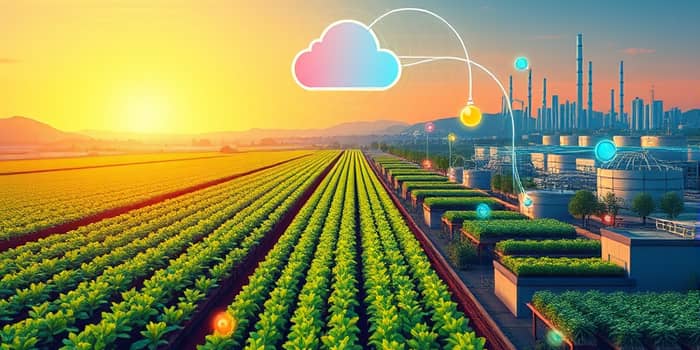
Agriculture remains the largest water consumer globally. Smart irrigation systems blend sensors, connectivity, and analytics to deliver water precisely when and where crops demand it. Rather than fixed timers, these systems adapt to weather, soil moisture, and crop stage.
Precision agriculture extends this idea further, integrating GPS mapping, robotics, and decision-support tools to optimize inputs across each field. The result is healthier plants, higher yields, and substantial water savings and enhanced yields.
Smart irrigation systems can reduce water use by 40% to over 70%, with sensor-based setups often paying for themselves within two years. Farmers report yield increases up to 40%, plus labor savings thanks to remote automation. Across sectors, precision water management:
Global adoption of smart water technologies is accelerating. The agricultural smart irrigation market is projected to grow at double-digit rates annually, driven by government incentives and rising water costs. In urban settings, smart controllers and leak detection platforms are saving municipalities millions of gallons per year.
Cities and homeowners are embracing smart controllers that adjust irrigation based on local weather and evapotranspiration data. Integrated pressure sensors and automated leak detection provide automated leak detection alerts when anomalies arise. Green infrastructure—like green roofs and rain gardens—is managed via remote platforms, ensuring optimal hydration without waste.
Municipal water utilities deploy advanced metering infrastructure (AMI) to track consumption at the household level. Data analytics identify high-use events and faulty equipment, driving rapid repairs and customer engagement campaigns.
Manufacturing and power generation facilities use precision flow meters and smart valves to regulate process water. AI-powered platforms predict maintenance needs for cooling towers, boilers, and treatment systems. By dynamically controlling flow rates, plants avoid overuse, reduce discharge volumes, and lower energy costs associated with pumping and treatment.
Zero-liquid discharge (ZLD) and recycle systems are further enhanced with real-time monitoring, ensuring compliance with stringent discharge regulations and supporting circular water reuse strategies.
Despite clear benefits, barriers remain. Upfront costs for sensors, connectivity, and platform subscriptions can deter smaller operations. Lack of robust rural networks limits IoT deployments. Data security and interoperability between vendors pose integration hurdles. Training and change management are critical to ensure technology is fully embraced by field teams and facility operators.
Public policy and financing solutions—such as subsidies, grants, and water-efficiency credits—are emerging to lower entry barriers. Collaborative pilot programs between technology providers, utilities, and end users are demonstrating proof of concept and building confidence.
As sensor costs decline and connectivity expands, we will see even finer-grained control: individual-plant irrigation, sub-hourly adjustment cycles, and integrated water-energy-carbon optimization. Advances in remote sensing and drone-based imaging will feed multi-spectral data into AI models, further refining irrigation prescriptions.
Blockchain and digital twin technologies promise secure, transparent water accounting across supply chains, enabling companies to verify and report their water footprints with unprecedented accuracy.
Precision resources—driven by IoT, AI, cloud analytics, and automation—are reshaping water management across agriculture, urban landscapes, and industry. By applying water only where, when, and how much it is needed, these technologies not only minimize waste but also foster resilience, profitability, and sustainability.
The journey toward a water-secure future depends on embracing these innovations, overcoming adoption barriers, and forging partnerships between technology providers, regulators, and end users. Every drop saved today is an investment in tomorrow’s prosperity—and in the health of our planet.
References