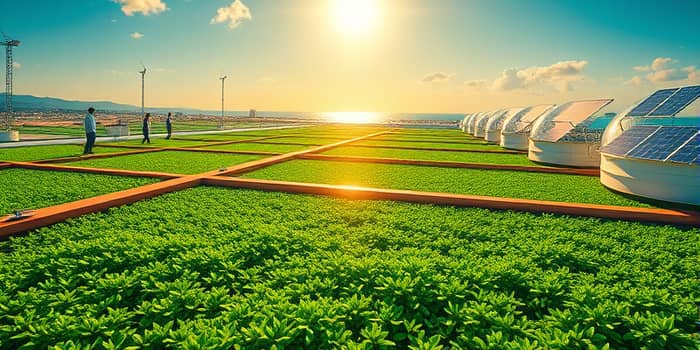
Algae have emerged as a transformative resource, promising to reshape energy, environment, and industry. With global markets soaring and innovations accelerating, this humble organism is poised to deliver both ecological benefits and robust financial returns.
From cutting-edge cultivation techniques to diverse end-use applications, algae offer a 10–100 times higher biomass and oil yield compared to terrestrial crops. Investors and researchers alike are betting on this rapidly evolving sector.
The global algae biofuel market is experiencing unprecedented expansion, driven by escalating demand for renewable energy and policy incentives. Recent reports project:
These forecasts imply a rapid 10.3% compound annual growth through the next decade. North America currently leads with over 41.3% market share in 2022, while Asia Pacific emerges as the fastest-growing region thanks to ample sunlight, coastal infrastructure, and increasing R&D funding.
Algae cultivation spans from open ponds to sophisticated photobioreactors. Key advances include strain selection, optimized growth media, and novel harvesting approaches, all aimed at maximizing lipid content.
Microalgae can accumulate 20–80% oil by dry weight, translating into 5,000–20,000 gallons per unit area annually. Scientists are harnessing this potential through:
These methods reduce production costs and expand scalability. For instance, marine algae grown with soil fungi on non-arable land demonstrate sustainable CO2 mitigation and nutrient recycling.
While biodiesel and bioethanol remain core outputs, algae’s versatility extends far beyond fuel. It serves in nutrition, agriculture, healthcare, and environmental remediation.
Key application areas include:
After oil extraction, residual biomass can fuel co-generation systems, providing cogenerated heat and electricity for onsite operations. Agricultural sectors benefit from algae-based biofertilizers that recycle nutrients without competing for cropland.
Despite vast potential, the industry faces hurdles in capital intensity, raw material sourcing, and process scale-up. Current production costs exceed those of conventional fossil fuels, necessitating continued innovation and supportive policies.
Major barriers include:
Strategic partnerships between governments, academia, and private firms are critical. Initiatives like the U.S. Department of Energy’s $118 million funding and the EU’s Horizon 2020 grants illustrate how public support can catalyze breakthroughs.
Looking ahead, several trends will shape algae’s trajectory as an asset class and ecological ally:
Emerging markets in Asia and South America are attracting new investments, while multinational energy firms secure stakes in start-ups, betting on future returns. Research into genetic and metabolic engineering promises to unlock untapped productivity across millions of algal species worldwide.
Algae stand at the intersection of innovation, sustainability, and profitability. With projected market values climbing from roughly $9 billion today to over $30 billion by 2035, investors have a unique opportunity to support a green revolution.
By championing advanced cultivation methods, diversifying into non-fuel applications, and overcoming economic barriers, stakeholders can harness algae’s full potential. This humble organism may well become one of the most valuable assets in our collective journey toward cleaner energy and a healthier planet.
References