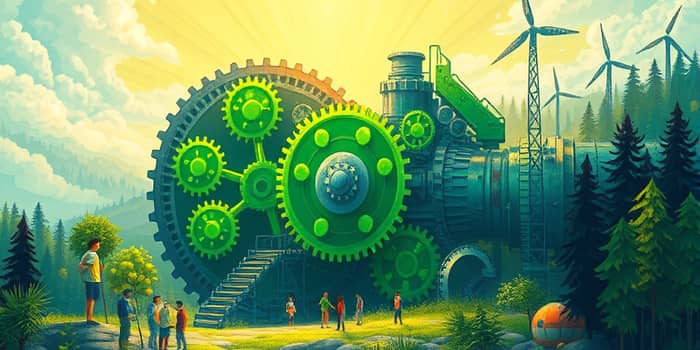
In an era marked by intertwined environmental crises and social inequities, the concept of abundance must evolve beyond mere resource expansion. This article unveils the “Abundance Engine” as the dynamic interplay of institutions, policies, technologies, and incentives designed to convert apparent constraints into resilience, wellbeing, and lasting prosperity.
Traditional measures of growth, anchored in GDP alone, have led to ecological overshoot and social fragmentation. We must pivot toward an economy that is measured by human and ecological wellbeing, prioritizing health, equity, and planetary vitality over raw output.
Rather than extractive growth, the new paradigm embraces regenerative production and universal provisioning, ensuring everyone has access to housing, food, healthcare, education, and connectivity without incurring unsustainable debt burdens.
What appears as natural scarcity often stems from design flaws in our systems. Fragmented governance, misaligned incentives, and regulatory bottlenecks artificially restrict supply, drive up costs, and erode resilience.
By removing bottlenecks and regulatory friction, we transform scarcity into sufficiency and unlock unprecedented collective capacity.
Humanity has already breached seven planetary boundaries already, pushing systems like freshwater, land use, and biochemical cycles beyond safe limits. Simultaneously, the World Health Organization attributes roughly 13 million preventable deaths each year to pollution, chemical exposures, and unsafe water.
True abundance respects these limits. It redesigns production and consumption to restore air quality, safeguard soil health, and maintain stable climate regimes, ensuring prosperity does not come at the planet’s expense.
Shared ownership models demonstrate how social design can bolster survival and prosperity. Cooperatives, driven by collective decision-making and pooled resources, far outlast conventional businesses:
When communities share ownership and governance, they build people-powered governance and shared prosperity, reducing vulnerability and fostering long-term stability.
The Abundance Engine comprises multiple conceptual pillars working in concert:
These elements form a self-reinforcing system in which each component amplifies the others, generating continuous improvement and resilience.
A political abundance agenda focuses on dismantling unnecessary barriers to housing, infrastructure, and clean energy. By streamlining permitting, adopting indirect taxation that rewards eco-friendly products, and enhancing transparency in public finance, governments can accelerate the transition from scarcity to sufficiency.
Key reforms include creating ministries organized around foundational elements like water and soil, and embedding indirect taxation that rewards eco-friendly products to reshape market incentives.
Innovation remains a cornerstone of technological abundance. A world of open ideas and broad participation fuels substitution—replacing scarce inputs with abundant alternatives—and drives productivity gains across sectors.
The clean-energy transition, dubbed the “largest economic opportunity since the Industrial Revolution,” already spans more than half of global GDP. Moving from a supply-constrained reality to one of abundant clean energy and resilient infrastructure reshapes industrial geography and unlocks new possibilities for growth that are both sustainable and equitable.
The Abundance Engine offers a roadmap to collective flourishing. By redefining success, redesigning institutions, and harnessing the power of cooperation and innovation, we can build an economy where both people and planet thrive.
Implementing this vision requires bold leadership, widespread collaboration, and unwavering commitment to long-term wellbeing. When we align our ambitions with ecological limits and social equity, abundance becomes not an elusive dream, but a shared reality—fueling a truly thriving planetary economy.
References