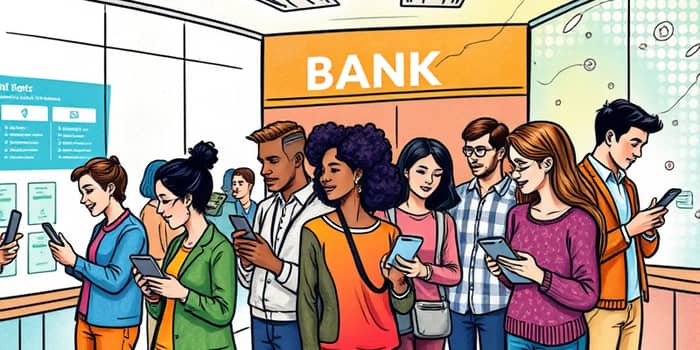
In today’s financial landscape, simply offering products is no longer enough. Institutions must stage powerful, memorable experiences to build lasting relationships and drive growth in a competitive, digital world.
By focusing on how services make customers feel, banks can shift from transactional interactions to end-to-end journey excellence that distinguishes them in a commoditized market.
The experience economy is an environment where businesses compete by designing and staging memorable experiences for customers instead of merely providing goods or services. First described by B. Joseph Pine II and James H. Gilmore in 1998, this concept frames experiences as a separate economic offering, distinct from goods and services.
In this model, customers pay not for completing a task but for time well spent. As digital connectivity and content availability increase, consumers prioritize experiences that enhance their emotional wellbeing and create lasting memories.
Industry research confirms that companies adopting experience-led growth strategies outperform competitors in revenue by nearly twofold, while boosting engagement and loyalty.
Financial products such as accounts, loans, and credit cards have become highly comparable. The true differentiator now lies in how the relationship feels. Digital challengers and fintech firms have lowered switching costs, making loyalty fragile without compelling experiences.
Money decisions are inherently emotional—fear, trust, anxiety, and aspiration all play a role. Experiences that educate, reassure, and empower customers during life events like buying a home or planning retirement forge deeper bonds than price-based offers.
Fragmented journeys cost banks dearly. Industry data shows nearly 15% of customers leave their institutions each year, driven by disjointed service and legacy-system constraints. Regulators further emphasize fair treatment and transparency, tying compliance to journey quality.
A customer journey maps every touchpoint from initial awareness through ongoing engagement and advocacy. In finance, these journeys are continuous, reflecting evolving needs and life stages rather than isolated marketing campaigns.
Historically, banks optimized individual touchpoints—like branch visits or mobile app logins—without considering the seamless flow between them. Today, leading institutions design micro-journeys for critical moments, such as resetting a password or applying for a credit limit increase, to enhance overall satisfaction.
Crafting experiences requires aligning strategy, design, and technology to meet customer expectations. Key pillars include:
Platforms such as CRM systems, real-time analytics engines, and intelligent chatbots enable personalized engagement at scale. Emerging tools—like augmented reality for financial education and AI-driven coaching—can elevate simple transactions into transformative experiences.
To ensure impact, institutions must track the right indicators. Core metrics include:
Consistently reviewing these KPIs alongside qualitative feedback from surveys and social listening provides a holistic view of journey health and highlights opportunities for continuous improvement.
Delivering end-to-end experiences demands a cultural and structural shift. Banks must break down silos by establishing cross-functional teams focused on customer journeys rather than isolated channels.
Embedding a data-driven mindset empowers staff at all levels to make decisions that enhance emotional connections. Leadership should appoint experience champions—individuals responsible for journey orchestration, governance, and rapid experimentation.
Agile methodologies, coupled with customer feedback loops, enable continuous refinement of processes and technologies. This iterative approach ensures that financial organizations can adapt to changing expectations and maintain long-term competitive advantage.
As the experience economy reshapes industries, finance stands at a pivotal crossroads. By embracing a holistic journey mindset, investing in personalization and seamless integration, and reorganizing around customer-centric principles, institutions can transform mundane transactions into emotionally resonant experiences. In doing so, they will not only retain loyalty but also unlock new avenues of growth in an increasingly digital world.
References