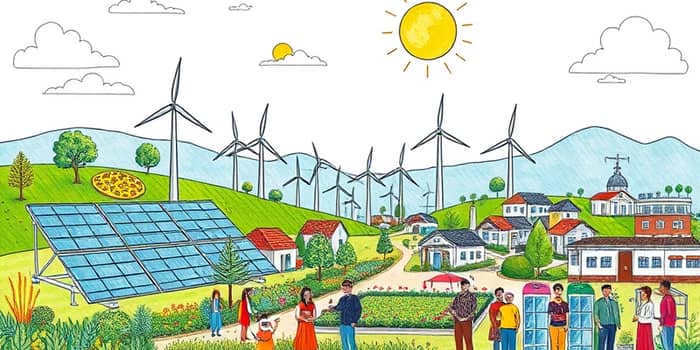
We stand at a crossroads where systemic risks—from climate change to social inequality—are no longer distant concerns but immediate threats to global stability. Millions of lives and trillions in assets hinge on redirecting capital toward real-world solutions.
With around misallocating the power of $500 trillion in global financial assets, the imperative is clear: shift from short-term gains to financing scalable, resilient innovations that preserve our shared future.
The term “polycrisis” captures the interlocking emergencies of climate breakdown, biodiversity loss, rising inequality and food insecurity. These are no longer fringe issues but core determinants of risk and return in capital markets.
As Wharton’s analysis points out, every investment is a vote for a specific future, shaping the physical and social world in which investors will operate.
Climate and environmental breakdown are unfolding at alarming speed. We are on a 2.6°C warming pathway above 20th-century averages, exposing coastal cities, agricultural systems and freshwater supplies to catastrophic stress.
Physical climate risk has become a balance-sheet issue: 57% of companies reported material impacts from storms, droughts and floods last year. Yet natural-capital investments must roughly triple by 2030 to avert irreversible damage.
Inequality is a structural threat to social cohesion and long-term stability. Financial actors now treat food as an asset class, often rent extraction from the food system profits from volatility rather than securing nutrition for vulnerable communities.
Unchecked speculation turns essential goods into financial instruments rather than public necessities, amplifying price spikes and undermining food and energy security worldwide.
The “Next Economy” framework envisions a new productivity frontier where capital funds companies solving, rather than causing, civilizational threats. It recognizes that derisking the world with superior financial performance is not just compatible but mutually reinforcing.
Investor priorities for 2026 reveal clear arenas for impact:
These areas not only address urgent needs but also open pathways to durable, scalable returns. Institutions like AXA IM, Amundi and LSEG highlight that net zero and decarbonization remain top of mind, while adaptation and social stability are gaining equal footing.
To redirect a fraction of that vast capital pool toward solutions, investors can take the following actions:
By embedding environmental and social metrics into decision-making, capital allocators transform markets and underpin a stable operating environment for future gains.
In a world defined by interlocking crises, speculation alone cannot sustain prosperity. The central challenge—and opportunity—is to redirect a fraction of that $500T from speculative activity toward financing the tangible solutions that build resilience, equity and long-term productivity.
Investors hold the keys to a better world. By moving beyond short-term bets and embracing the next economy, we can ensure that every dollar works to secure a thriving planet and society for generations to come.
References