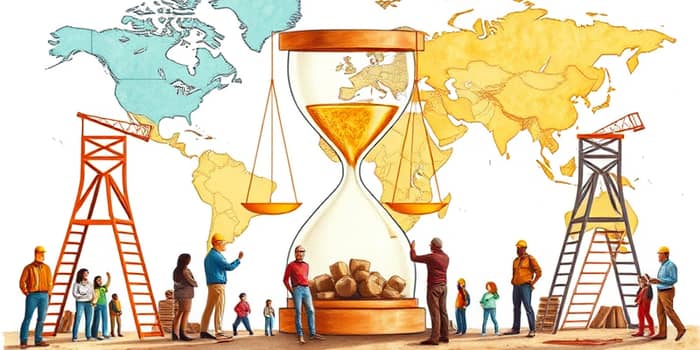
In an age of unparalleled growth and innovation, vast swaths of the global population remain excluded from its rewards. This article examines how society can be reshaped by adaptive, equitable economic systems, the urgency of reforming current structures, and the roles played by key actors—our “financial architects of equity.”
At its core, economic equity is the principle of fair distribution of income, wealth, and opportunities within a society. Unlike efficiency, which measures total output, equity evaluates who benefits from that output.
Equity covers both the processes by which resources are allocated and the outcomes that result. It demands attention to rules, access, and final distribution.
Beyond moral arguments, substantial research shows that inequality short-changes the economy. When large segments cannot access education or finance, society loses potential innovation and productivity.
The Business Case for Racial Equity reports that closing earnings gaps leads to higher GDP growth, more skilled labor, and expanded tax revenues. It also lowers public expenditures on safety nets.
Human Economics Systems Theory links economic design to health, social cohesion, and environmental resilience, arguing that systems focusing solely on growth neglect vital sustainability factors.
In the United States, income and wealth have become increasingly concentrated among the top 5 percent of households since the 1980s. Racial disparities are stark, as shown in the table below.
These figures reveal that, on average, white families had 10 to 13 times more wealth than Black or Hispanic families. Projections suggest these gaps could double by 2043 if unaddressed.
Global South nations criticize the current international financial architecture (IFA) for being unresponsive to crises such as pandemics, climate disasters, and debt shocks. Calls for reform emphasize inclusive decision-making processes in institutions like the IMF and World Bank.
Leaders from developing countries have distilled their demands into a six-part framework that can guide global reform:
Governments, multilaterals, investors, firms, and grassroots movements are all acting as financial architects of equity. Their strategies include:
These interventions aim to create resilient and sustainable growth while ensuring that no community is left behind.
Constructing a fairer economic landscape requires bold vision and coordinated action. As financial architects of equity, all stakeholders must embrace reforms that balance effectiveness with fairness.
By redefining metrics of success to include well-being, social cohesion, and environmental health, we can build an economy that serves everyone. The time to act is now—our shared future depends on it.
References