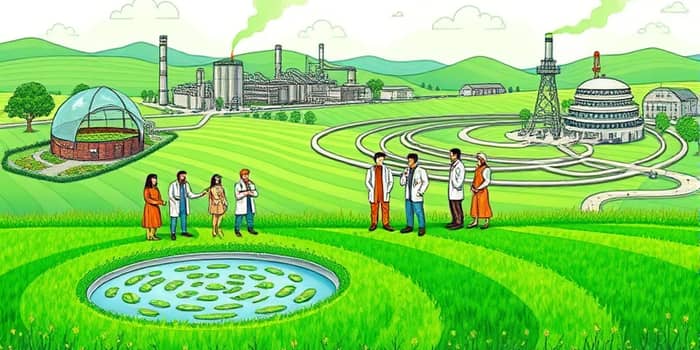
The world stands at the dawn of a new era. In 2025, record funding in 2025 propelled biotechnology into the spotlight, unlocking solutions that promise to reshape our planet’s future. From drought-tolerant crops in Africa to algae-based biofuels in Asia, global momentum for environmental biotech is surging.
In the first half of 2025, biotech startups focusing on climate resilience and sustainability secured an astonishing $14.2 billion, a 38% increase over 2024. Governments and private investors alike are recognizing the unprecedented potential of biotech to address climate change, food insecurity, and resource depletion.
Major regions have become hubs for innovation. The European Union channels billions via the Green Deal into bio-based manufacturing and a circular economy. In the Asia-Pacific, Singapore and South Korea pioneer algae-derived biofuels and sustainable food systems. Latin America leverages its rich biodiversity to engineer climate-resilient crops that thrive under extreme weather conditions.
The agricultural sector is undergoing a revolutionary shift often called Green Revolution 2.0. Biotech firms are engineering crops that withstand droughts and extreme weather, drastically reducing water and fertilizer requirements while boosting yield.
Farmers in Nigeria, Ghana, and Burkina Faso pilot the Bt Cowpea Program, funded by USAID, to combat devastating pests. At the same time, companies such as Kapsera and Biomax Technologies develop advanced biofertilizers that replace fossil-fuel–derived alternatives.
Beyond agriculture, biotechnology is revolutionizing how we source materials. Algae-based biofuels are being tested in collaboration with industry giants like Audi and Clariant. Companies such as OliveBio produce PHA bioplastics that naturally degrade, tackling the 400 million tonnes of plastic waste generated annually.
The emergence of C1 biotechnology or gas fermentation harnesses syngas emissions as a carbon feedstock. Microbes engineered with CRISPR-Cas convert these gases into valuable chemicals and fuels, turning pollutants into profit. Circular economy models are closing the loop on waste, ensuring that nothing goes unused.
The beauty industry is also in the vanguard of sustainable biotech. Fermented actives like hyaluronic acid and probiotics deliver superior performance with a lighter ecological footprint. Algae-derived bio-actives offer potent hydration and anti-aging benefits, all while safeguarding fragile ecosystems.
Industrial biomanufacturing leverages metabolic engineering to produce enzymes, textiles, and specialty chemicals at scale—often with dramatically lower emissions and energy consumption compared to traditional processes.
Despite the optimism, significant hurdles remain. Scaling biomanufacturing infrastructure demands high upfront investment. Stringent GMO regulations in many markets slow down commercialization pathways. Public perception of genetic engineering must be addressed through transparent education and stakeholder engagement.
Equity considerations are also paramount. Programs like Bt Cowpea must be tailored to the needs of smallholder and marginalized farmers, ensuring that innovations do not perpetuate existing inequalities.
As we move beyond the historical Green Revolution of the mid-twentieth century, today’s biotech-driven revolution offers a chance to build a truly sustainable agricultural and industrial ecosystem. By integrating planetary health goals into every stage of development—from lab bench to field to factory floor—we can create resilient food systems, decarbonize heavy industries, and restore ecosystems worldwide.
Stakeholders across sectors—investors, policymakers, researchers, and communities—must collaborate to scale promising technologies and ensure equitable access. The critical next decade will determine whether biotechnology fulfills its promise as the cornerstone of a low-carbon, nature-positive economy.
Bio-Tech’s Green Revolution is not a distant vision; it is unfolding now. Fueled by record-breaking investment, powered by cutting-edge science, and guided by sustainable principles, biotech stands poised to deliver solutions that heal our planet and uplift communities.
By embracing innovation, forging inclusive partnerships, and maintaining unwavering commitment to environmental stewardship, we can ensure that this revolution benefits all. The time to act is now, and the future we cultivate today will define generations to come.
References