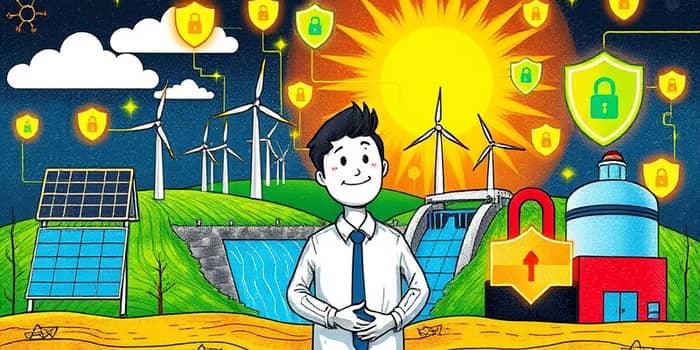
Green investments offer the promise of both environmental impact and sustainable returns, yet cautious investors often hesitate in the face of complex uncertainties.
Green energy projects face a diverse spectrum of hazards that can deter even seasoned financiers. From sudden regulatory shifts to fluctuating market prices, each investment carries its own set of unknowns.
Key risk categories include:
In plain English, de-risking means reallocating or sharing potential risks so that projects become more predictable, bankable, and attractive to investors. It encompasses tools that reduce downside, lower cost of capital, and enhance confidence.
By complementing private capital with public support, stakeholders can help bridge the climate finance gap—estimated $2–4 trillion annually in developing markets—and mobilize the resources needed for large-scale renewable deployment.
To address these risks, cautious investors can deploy a range of strategies:
Stable, transparent frameworks are the foundation for green investment. Key policy measures include clear long-term targets, consistent auction or tariff designs, streamlined permitting and grid-access procedures, and enforceable environmental and technical standards. When governments establish strict long-term policy roadmaps, they can significantly improve investor confidence and reduce the cost of financing.
Financial instruments can directly enhance the risk-return profile of renewable projects. These include guarantees, first-loss capital, concessional debt, subordinated loans, blended finance structures, and a variety of insurance products covering political and weather risks. By deploying these mechanisms, investors can stabilize cash flows and revenues, lower borrowing costs, and attract a broader set of capital providers.
A thorough technical due diligence process addresses uncertainties around resource availability, equipment performance, and construction quality. Key actions involve independent engineering reviews, detailed resource and energy-yield assessments, rigorous vendor certification, and performance guarantees. Through robust due diligence processes, investors gain clarity on project viability and reduce the chance of costly overruns or underperformance.
Volatile electricity prices and fluctuating demand can undermine revenue projections. Market risk can be contained through long-term power purchase agreements (PPAs), auction designs with floor-price guarantees, hedging and price-collar strategies, and diversified offtake portfolios. Securing secured bankable long-term contracts makes revenue streams more predictable and financing more accessible.
Community support and social license are vital to prevent delays and reputational damage. Effective social de-risking practices include early stakeholder engagement, transparent communication, benefit-sharing models, and local hiring initiatives. By fostering genuine local participation, project developers can minimize opposition and build long-term trust.
Instead of concentrating on a single project, spreading investments across technologies, geographies, development stages, and counterparties can effectively balance project-specific uncertainties. A diversified portfolio insulates investors from localized policy shifts, resource variability, or market downturns, facilitating smoother overall returns.
The UNDP’s Derisking Renewable Energy Investment (DREI) framework offers a structured approach for orchestrating public interventions and private capital. It identifies barriers and prescribes three types of measures:
By combining these targeted interventions with private investment, DREI helps catalyze utility-scale renewables, on-grid rooftop solar, mini-grids, and other clean-energy solutions at scale.
Clean hydrogen illustrates the critical role of de-risking: fewer than 10% of announced projects reach financial close due to high perceived risks. Strategic application of blended finance, government guarantees, and risk-transfer instruments can unlock this sector and accelerate its path to commercialization.
Green investing does not require accepting unmanaged uncertainty. Through a combination of policy clarity, financial innovation, technical rigor, market safeguards, community engagement, and portfolio diversification, cautious investors can secure stable returns and power the transition to a low-carbon future.
By adopting the right de-risking tools and frameworks, investors not only protect their capital but also become active drivers of global climate action.
References