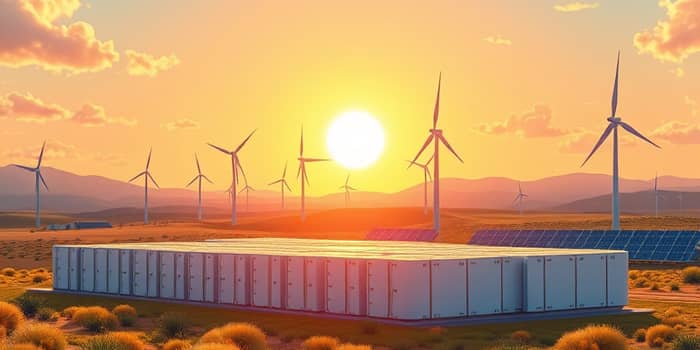
As the global energy landscape accelerates towards decarbonization, the evolution of storage technologies stands at the forefront of innovation. Enter next-generation batteries—a dynamic force driving transformative market growth at a robust pace and offering a blueprint for investors, engineers, and policy architects alike.
Industry analysts project an extraordinary expansion in battery storage value, underpinned by surging electric vehicle sales and breakthroughs in renewable integration. With a current valuation nearing USD 1.76 billion and forecasts exceeding USD 3.09 billion by 2030, stakeholders are poised to benefit from breakthroughs in solid-state and lithium that amplify energy density and safety.
This surge reflects an annual CAGR of up to 11.8% through 2035, driven by strategic investments and policy incentives that lower barriers to adoption.
Four key forces propel the momentum of energy storage solutions, each contributing to a synergistic ecosystem:
Together, these drivers are forging a landscape where energy storage is no longer optional but essential for sustainable growth.
While lithium-ion batteries currently dominate the market, a wave of alternatives is reshaping the horizon. Solid-state batteries replace liquid electrolytes with ceramic membranes, offering extended cycle life and faster charge rates alongside exceptional safety. Lithium-sulfur chemistry promises higher energy density, while sodium-ion systems deliver cost-effective, eco-friendly options for stationary storage.
Additional innovations like magnesium-ion, flow batteries, and hydrogen-battery hybrids are undergoing intensive research. Across all platforms, R&D is focused on:
The result is a portfolio of solutions capable of addressing diverse applications—from electric mobility to grid stabilization.
North America leads with aggressive domestic manufacturing expansion and supportive policies like the U.S. Inflation Reduction Act. Canada’s Critical Minerals Strategy ensures a resilient supply chain, making the region a powerhouse for both investment and innovation.
Europe, under the EU Green Deal, commits to decarbonization through substantial funding for battery gigafactories and R&D hubs in Germany and France. Asia Pacific remains a manufacturing giant, with major players in China, Japan, and South Korea advancing both production scale and technological prowess.
Battery systems are transforming multiple sectors. Major segments include:
For investors, these segments represent both low-risk entry points and high-growth horizons. Identifying the right mix of technologies and applications is key to unlocking sustainable returns.
Success in the evolving battery market hinges on a strategic investment roadmap for long-term success. Consider the following approach:
Emphasize collaboration and flexible capital deployment to adapt as the market matures. Integrating seamless integration with renewable energy systems and comprehensive battery management systems with AI will enhance asset performance and longevity.
The next decade promises unparalleled advancements in energy storage, backed by robust market drivers and cutting-edge technologies. By following a disciplined, informed approach and leveraging collaborative public-private partnerships driving innovation, investors can champion a new era of sustainable power. The time is now to engage with the revolution and shape a cleaner, more resilient energy future.
References