As the global population shifts into urban centers at an unprecedented pace, cities have become both the epicenter of climate challenges and the proving ground for innovative solutions. With more than 70% of global CO₂ emissions generated by urban areas, the opportunity—and the urgency—to revolutionize our built environment has never been greater.
Against a backdrop of aging infrastructure and fiscal strain, a remarkable gap has emerged: while cities drive the climate problem, they receive just 7% of total climate tech funding. To bridge this divide, visionary investors and city leaders are deploying next-generation technologies and financial models that promise to reshape urban life.
Urbanization is surging most rapidly in low- and middle-income countries, placing added pressure on housing, utilities, and public services. At the same time, climate hazards—ranging from extreme heatwaves to rising sea levels—threaten the health, safety, and economic well-being of city dwellers.
Infrastructure built decades ago struggles to cope with modern demands. Many public systems face affordable housing shortages, aging infrastructure, and fiscal stress, leaving cities vulnerable to the worst impacts of climate change.
Despite their outsized emissions, cities are underfunded: an “outsized emissions footprint vs undersized investment” gap persists in the built environment. Yet this challenge opens a door for investors and innovators to deliver high-leverage solutions that cut emissions quickly and build climate resilience.
What began as visionary pilot projects has matured into operational, data-driven ecosystems. Today’s smart cities blend digital infrastructure, AI, IoT, and automation to deliver measurable impact in communities across transportation, energy, water, and public safety.
Crucially, these technologies are no longer siloed. Cities are adopting multi-domain and integrated platforms, breaking down departmental barriers to focus on outcomes rather than isolated projects. The emphasis has shifted from technology for its own sake to an insights-driven and outcomes-focused city programs approach.
Beyond digitization, the concept of climate-smart cities brings together mitigation and adaptation strategies in emerging economies and beyond. Three major programs illustrate this holistic vision.
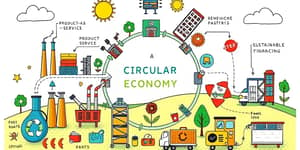
The UNFCCC initiative delivers evidence-based blueprints for deploying energy retrofits, efficient transit, and circular waste systems. Meanwhile, the Climate Investment Funds’ program focuses on low-carbon, climate-resilient urbanization through multi–development bank partnerships that finance replicable urban models.
Complementing these, Yale’s research emphasizes nature-based solutions—from cool roofs and green corridors to wetlands restoration—that integrate seamlessly with hard infrastructure and center equity in adaptation planning.
Navigating the urban climate opportunity requires a diverse cast of financial actors. Until recently, the built environment languished at the back of the funding queue. Now, institutional investors, venture funds, and innovation platforms are mobilizing capital to decarbonize and modernize cities.
Leading the charge, funds such as Climate Capital back technologies that reshape how we design and manage urban spaces. Their portfolio spans low-carbon materials like sustainable cement and mass timber, advanced HVAC retrofits, and digital twin platforms for real-time energy optimization.
Future of Cities™ Ventures extends this momentum, investing across lifecycle stages in cutting-edge urban innovations: from flood- and heat-resilient infrastructure to public health tech that preps cities for future pandemics. Their commitment to regenerative development and sustainability underscores the link between livability and resilience.
Innovation ecosystems such as the Plug and Play Smart Cities Program connect startups, corporates, and municipalities. By offering acceleration, testing grounds, and de-risked pilot funding, these networks catalyze scalable solutions that might otherwise stall at the proof-of-concept stage.
We stand at a pivotal moment. The technologies and financial frameworks needed to decarbonize cities exist—and yet funding remains uneven. To realize the promise of urban climate tech, stakeholders must move early, collaborate across sectors, and embrace a systems mindset.
City governments can partner with private investors to pilot high-impact solutions. Financial institutions should elevate urban climate initiatives to match their carbon footprint. And innovators must design with equity and resilience at the forefront.
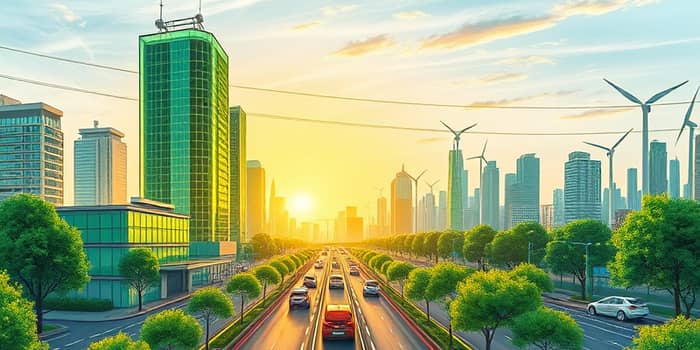
By closing the 7% funding gap, we unlock transformative potential: cooler streets, cleaner air, efficient transport, and cities that can withstand the shocks of a changing climate. Smart cities powered by smart money will not only reduce emissions—they will redefine urban life for generations to come.
Together, we can build cities that do more than endure climate change. They can thrive in it—creating healthy, connected, and sustainable communities worldwide.
References