In a time when ecological degradation and social inequity intersect, regenerative finance emerges as a beacon of hope. By weaving together economic activity and ecological health, this approach reframes capital flows to rebuild ecosystems and uplift communities. The journey toward a truly regenerative economy demands systems thinking, inclusive governance, and innovative technologies working in concert.
This article explores how regenerative finance fosters deep connections among nature, people, and markets to create resilient, thriving systems.
Regenerative finance, often called ReFi, redefines the purpose of money. Instead of chasing only short-term gains, it prioritises ecological restoration, social wellbeing, and shared prosperity. By embracing sustainability lies at the heart of every investment, ReFi shifts from extraction to regeneration.
This approach builds on key principles drawn from regenerative economics and living systems science, challenging conventional metrics like GDP. It measures success by the health of ecosystems, the strength of communities, and the durability of positive impacts.
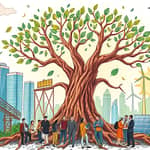
At the heart of regenerative finance lies the idea that no investment exists in isolation. Financial decisions ripple through social and ecological networks, creating complex feedback loops. A cornerstone of this worldview is properly understood living systems alignment, where financial functions mirror natural cycles of growth and renewal.
The ReFi stack exemplifies this integration. It layers:
1. Digital monitoring, reporting, and verification (D-MRV) for transparent impact tracking.
2. Tokenization of real-world assets—such as carbon credits and green bonds—to democratize access.
3. Decentralized governance enabling community-led stewardship of funds and outcomes.
Together, these components ensure that every action is accountable, traceable, and aligned with broader ecological goals.
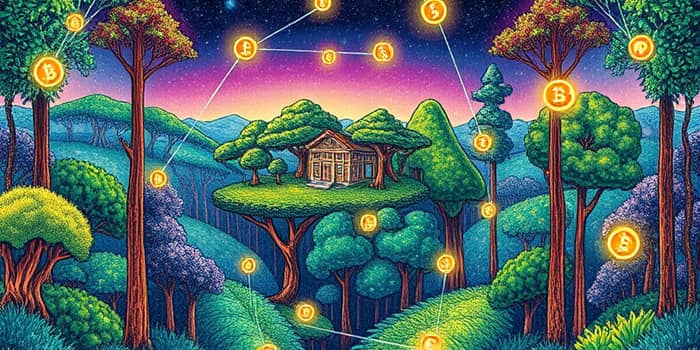
Blockchain and decentralized finance (DeFi) provide the backbone for many ReFi innovations. By automating processes and embedding rules into smart contracts, projects can scale regenerative solutions without sacrificing transparency or trust.
Key mechanisms include:
These tools not only streamline funding but also embed accountability and adaptability into each project, fostering resilience and continuous improvement.
Across the globe, pioneering institutions and projects demonstrate what interconnected finance can achieve. From community banks to Web3 platforms, each example highlights the power of aligning capital flows with regenerative outcomes.
By channeling resources into these initiatives, stakeholders help restore biodiversity, empower underserved communities, and create circular economic loops that minimize waste.
Regenerative finance addresses persistent challenges—inefficiencies, lack of accountability, and uneven capital distribution—by redesigning incentives and processes. This shift yields four major benefits:
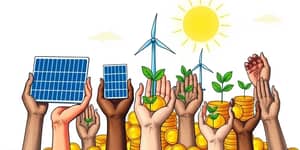
With these outcomes, ReFi aligns closely with UN Sustainable Development Goals—clean energy, reduced inequalities, and climate action—creating a measurable path to global regeneration.
Despite its promise, regenerative finance faces obstacles: unstandardized impact metrics, regulatory uncertainty, and the need for broad stakeholder engagement. Bridging web2 systems with web3 innovations also requires capacity building and interoperability frameworks.
However, momentum is building. Governments, NGOs, and private investors are launching collaborative platforms and pilot programs. A shared vision for a post-growth, wellbeing-centered economic paradigm is gradually reshaping policy agendas and corporate strategies.
Regenerative finance is more than a technical framework—it represents a profound shift in values. By embracing integration of regenerative metrics into performance and fostering genuine stakeholder inclusion, we can transform capital into a force for healing.
We all have a role to play: whether as investors, community leaders, technologists, or policymakers. By working together and harnessing the power of interconnectedness, we can build an economic ecology that sustains both people and planet for generations to come.
References