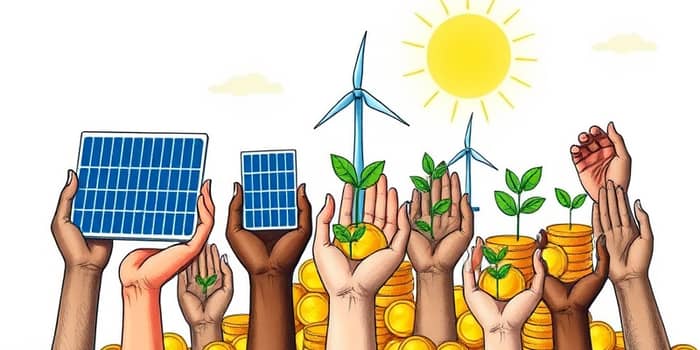
The urgency of channeling capital toward a sustainable future has never been greater. With vast financing gaps threatening progress on climate, development, and social equity, innovative solutions are essential to transform vision into reality.
Global efforts to achieve the Sustainable Development Goals (SDGs) face a staggering shortfall. The United Nations estimates a US$4 trillion per year shortfall in funding needed to meet the SDGs. This gap extends into the climate realm, where the world still falls US$2.2 trillion annually behind the figure required for a full energy transition.
Unchecked, these deficits carry a heavy price. From extreme weather losses to lost economic output, the cost of inaction will dwarf the investment needed today. For example, Middle East and North Africa economies risk a 21% GDP decline by 2050 without timely climate action. Addressing these funding challenges is not a luxury—it is a strategic imperative.
Traditional green finance supports projects already deemed low-carbon. Yet transitioning high-emitting industries demands a distinct approach. Transition finance bridges brown and green, enabling sectors like steel, cement, shipping, and aviation to decarbonize in line with 1.5°C pathways.
The Glasgow Financial Alliance for Net Zero defines transition finance as investment, financing, insurance, and related products that facilitate an orderly shift to net zero. Its credibility hinges on these core elements:
Establishing common definitions and standards—promised at COP28—is critical to scaling credible transition finance. A unified taxonomy or principles-based framework can restore trust and accelerate capital flows.
Mobilizing trillions in new investment requires creative financing instruments. Blended finance combines public, philanthropic, and private capital to transform seemingly non-investable projects into bankable opportunities.
Its three building blocks work in concert:
Beyond blended structures, a suite of debt instruments can channel capital efficiently. Green bonds finance renewable infrastructure and efficiency upgrades. Sustainability-linked loans tie interest rates to emissions reductions or ESG targets, rewarding progress with lower borrowing costs.
A truly sustainable transformation leaves no community behind. Just Energy Transition Partnerships (JETPs) combine concessional public finance with private capital to decarbonize emerging economies while protecting vulnerable workers and regions. This socially focused approach ensures new green jobs, skills development, and robust safety nets accompany the shift away from fossil fuels.
Practical steps for funders include:
The transition to a thriving, net-zero world demands collaboration across public, private, and philanthropic sectors. Financial actors must adopt credible transition plans, governments need to deploy targeted incentives, and civil society should hold stakeholders accountable.
Every investor, large or small, has a role to play. By directing capital into innovative blended structures, backing just transitions, and supporting robust standards, we can close the trillions-dollar financing gap. The benefits—a resilient economy, healthier communities, and a stable climate—will far outweigh the costs.
Now is the moment to unlock potential. Through bold commitments and practical mechanisms, we can finance a thriving world that leaves no one behind.
References