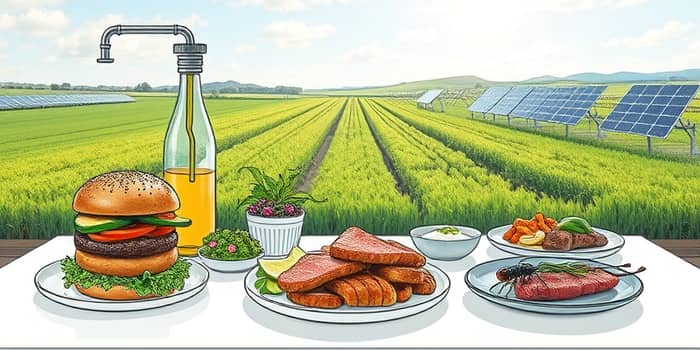
In a world grappling with climate change, food security, and health crises, alternative proteins have emerged as a beacon of hope. This sector has evolved into a fast-growing investment theme that promises to reshape agriculture and food supply chains.
As global populations swell and conventional farming strains natural resources, investors and innovators are turning towards novel protein sources. These alternatives offer the possibility of climate, food security, and health pressures, presenting a multifaceted solution that addresses urgent challenges.
The journey from hype to commercial reality underscores both remarkable progress and persistent hurdles across production, taste, and cost. The sector’s path will hinge on cost reduction, product performance, regulation and manufacturing scale as companies strive for competitive parity.
Alternative proteins cover a spectrum of production methods designed to replace or complement traditional meat, dairy, and seafood. Understanding these pathways is crucial for investors seeking exposure to this dynamic industry.
Although projections vary widely, most analysts agree that the alternative protein market will experience sustained double-digit growth over the next decade. Forecasts illustrate the sector’s promise while acknowledging underlying uncertainties.
The range of forecasts, from US$26.5 billion to well over US$100 billion within a decade, highlights both opportunity and risk. Investors must navigate this uncertainty while recognizing significant long-term upside for investors.
Shifts in consumer preferences are a critical driver of alternative protein adoption. As awareness grows, more people choose flexitarian or fully plant-based diets, propelled by health, ethical, and environmental concerns.
A recent study found that 87% of consumer respondents in key markets aim to reduce animal meat consumption, reflecting a shift away from traditional diets. Global animal-based protein sales exceed US$1.4 trillion, yet alternative proteins, currently valued around US$14 billion, are growing at roughly 10% annually compared to 2% for legacy meat.
The alternative protein sector combines robust macro tailwinds with cutting-edge technology, making it an attractive area for portfolio diversification. Key investment themes include innovative ingredients, novel manufacturing platforms, and brand-led consumer adoption.
However, investors must remain vigilant about regulatory hurdles, consumer acceptance, and the capital-intensive nature of scaling new production technologies. Funding declined by 44% in 2023, underscoring the need for prudent risk management.
As the largest and most established category, plant-based proteins often serve as the gateway for mainstream consumers. Brands leverage familiar ingredients—soy, pea, wheat—to create analogs of meat, dairy, and seafood.
Despite early success, the industry faces challenges in replicating tastes and textures of conventional meat and overcoming price differentials. With increased manufacturing scale and technological improvements, price parity is expected in the coming years, unlocking broader market penetration.
Fermentation-derived proteins, produced through biomass or precision fermentation, offer exceptional functional qualities. From mycelium-based meat alternatives to recombinant dairy proteins, this category delivers specialized ingredients that can outperform traditional counterparts.
Cost reductions have been dramatic, falling over seven orders of magnitude since the 1990s. Industry forecasts predict that fermentation-based dairy substitutes will hit price parity by 2027–2028, paving the way for rapid commercialization and B2B ingredient sales.
Cultivated meat holds the promise of real animal protein without slaughter. By growing cells in bioreactors, producers aim to replicate the taste and nutritional profile of poultry, beef, and seafood. Recent regulatory approvals in multiple countries validate the technology’s viability.
However, high production costs and supply chain complexity remain formidable obstacles. Analysts estimate 50%–80% cost reduction over next years driven by medium optimization and scale economies. Success in this segment could redefine the global meat industry.
Alternative proteins sit at the intersection of technology innovation and sustainability. To fulfill their promise, stakeholders—from entrepreneurs to policymakers—must coordinate on regulatory frameworks, infrastructure investment, and consumer education.
Public funding lags behind the estimated US$10.1 billion needed annually to accelerate research, scale production, and ensure equitable access. Yet, a powerful long-term economic argument emerges: the sector could support up to 83 million jobs worldwide by 2050, reinforcing its role in future food systems.
As the world confronts environmental and nutritional challenges, alternative proteins represent a strategic lever for transformation. Investors willing to embrace complexity, manage risks, and support innovation will be best positioned to benefit from this evolving landscape.
By focusing on scalable technologies, fostering collaboration, and championing sustainable practices, we can reshape how the globe sources its protein. The future of food lies in our ability to adapt, innovate, and invest wisely in these groundbreaking solutions.
References