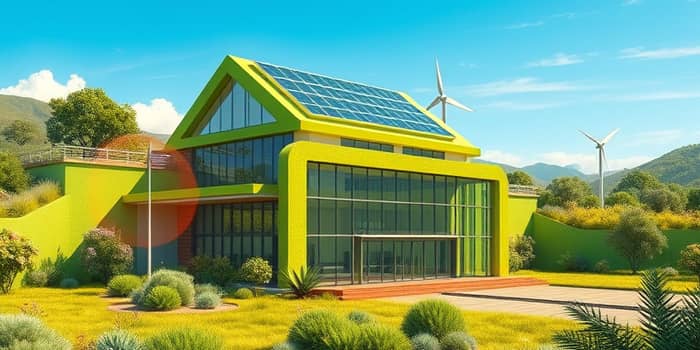
As we stand at the crossroads of climate urgency and financial opportunity, green building technologies emerge as a beacon for investors seeking both strong returns and lasting impact. In 2025, the US sustainable investment market reached $6.6 trillion in assets, illustrating a profound shift toward eco-conscious portfolios. Yet beyond raw figures lies a story of innovation, resilience, and the chance to shape a net-zero future through strategic, long-term investments.
Today’s investors are drawn to sustainable real estate not only for its ethical underpinnings but for its measurable performance. Wind and solar unlisted equities have delivered a 16% compound annual return, while unlisted infrastructure equities returned 12% and listed infrastructure equities 6%.
These trends signal a market in transition, where climate-resilient infrastructure is no longer niche but a core pillar of growth. By 2030, annual investment in green buildings must accelerate to meet net-zero by 2050 goals—presenting both challenge and opportunity.
Breakthrough innovations are transforming how buildings are designed, constructed, and operated. Three pillars stand at the forefront:
AI and Digital Twins
Generative AI explores structural layouts that minimize material use without compromising strength. Real-time digital twins—virtual replicas of physical buildings—allow facility managers to predict energy use, airflow, and maintenance needs. Heathrow Terminal 5, for example, used digital twins to optimize thermal comfort and energy efficiency before construction began.
Renewable Energy Integration
Solar glass windows and roof tiles that mimic traditional shingles are reshaping urban facades. Floating wind farms and advanced geothermal systems, as demonstrated at Google’s Bay View Campus, provide steady renewable power while reducing carbon footprints.
Smart Grids and Energy Storage
AI-driven microgrids balance supply and demand in real time, while next-generation batteries store excess power for peak usage. IoT sensors track real-time power usage tracking and automate lighting and climate controls, driving operational costs down and elevating occupant comfort.
Investors seeking to capitalize on green building tech should consider a diversified approach. Key strategies include:
By balancing risk and reward across sectors—from office and logistics to emerging residential markets—investors can capture upside while supporting broader decarbonization efforts.
Despite strong momentum, challenges persist. Unclear regulatory frameworks, data privacy concerns, and high upfront costs can deter investors. To navigate these barriers:
Such proactive measures unlock the full potential of sustainable buildings while mitigating risk.
Examining case studies brings theory to life and offers valuable lessons for investors:
Google’s Bay View Campus stands as a net-zero marvel: 100% solar roof coverage, geothermal heating and cooling, and advanced smart controls delivering unprecedented energy performance. In the logistics sector, adaptive reuse of warehouses with sustainable glass technology and insulation has driven significant value creation.
Investing in green building technologies is more than a financial decision—it’s a commitment to future generations. As asset managers and owners anticipate sustainable AUM growth, individual investor confidence may fluctuate, but the trajectory is clear: climate resilience drives value.
By embracing AI-powered design, renewable integration, smart grids, and low-carbon materials, investors can generate attractive returns while championing global climate goals. The next decade promises to reshape our built environment; those who act now will not only profit but leave a legacy of resilience and innovation.
Our collective actions today will define tomorrow’s skylines. Let us invest wisely, build sustainably, and pave the way to a net-zero energy achievement that benefits both people and planet.
References