The 21st century stands at a crossroads. We face unprecedented climate emergencies, social inequities, and economic vulnerabilities.
Yet within these challenges lies an extraordinary opportunity: a chance to spark a true renaissance of regenerative finance that rebuilds our world from the ground up.
A regenerative economy moves beyond the outdated linear model of “take, make, waste” and the limited circular focus on efficiency and recycling. It aims for net-positive impacts for ecosystems and communities, actively restoring soils, water, biodiversity, and social well-being.
Where a circular economy seeks to minimize harm, a regenerative economy strives to leave systems healthier and more resilient than before. At its core is holistic systems thinking and design, treating nature, society, and the economy as one interdependent web.
Long before formal definitions emerged, Indigenous knowledge systems modeled deep stewardship and reciprocity with the land. In the 1970s, ecological economics introduced the idea that the economy is a subsystem of a finite biosphere. The 1990s sustainability movement championed “doing less harm,” while the 2010s circular economy emphasized resource loops.
Today, we enter a new era akin to Europe’s Renaissance—a pivotal moment when conflict and crisis gave rise to unprecedented creativity, science, and commerce. This modern resurgence, often called a “Regenerative Renaissance,” beckons us to transcend the extractive industrial era and embrace collaboration over competition.
The Capital Institute outlines eight guiding principles. Below are five fundamental criteria that serve as a compass for building regenerative systems:
These principles encourage designers, policymakers, and investors to move from isolated profit metrics toward thriving, interconnected systems.
Traditional finance often serves extraction: concentrating wealth, imposing debt burdens, and marginalizing communities. To redirect capital toward regeneration, we need justice-centered frameworks that subordinate debt to community health and democratize financial governance.
The Climate Justice Alliance proposes a four-part policy roadmap: Protect, Repair, Invest, Transform:
Key tools include participatory budgeting, community development financial institutions, and impact bonds that tie returns to environmental and social outcomes. By redefining finance as a servant of well-being, we can unleash capital flows that nurture both profit and planetary health.
Investors seeking both returns and regeneration can adopt several practical strategies. First, integrate environmental and social metrics into due diligence, assessing potential projects for their capacity to drive robust circulatory flow of value across regions.
Second, prioritize local partnerships and place-based models that draw on unique cultural, ecological, and historical contexts. Third, embrace patient capital—long-term investments that allow regenerative processes time to mature and compound benefits across decades.
Finally, foster cross-sector collaboration at the “edge effects” where agriculture meets technology, finance meets community governance, and art meets ecological restoration. Innovation often emerges most powerfully at these intersections.
As we write the next chapter of economic history, stakeholders at every level—governments, businesses, nonprofits, and individuals—must pivot from extraction to regeneration. This demands courageous policy reforms, bold financial innovation, and a shared commitment to equity and resilience.
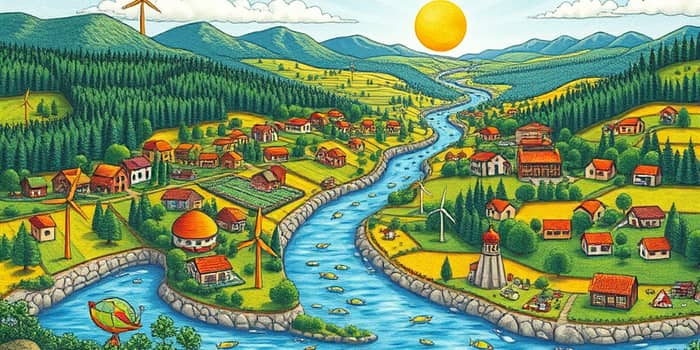
By aligning capital flows with the principles of living systems, we can cultivate a world where forests, farms, towns, and markets flourish in harmony. Each investment, policy change, and community initiative becomes a brushstroke in a grand canvas of renewal.
The Regenerative Renaissance invites us to envision a prosperity that reverberates across ecosystems and societies. It compels us to design economies that heal the planet while uplifting human dignity. Above all, it offers hope: the conviction that even amid crisis, we can co-create a future richer, more inclusive, and more vibrant than anything that has come before.
Now is the moment to invest boldly, think systemically, and act collaboratively. Together, we can usher in a new era of lasting abundance—for people and planet alike.
References