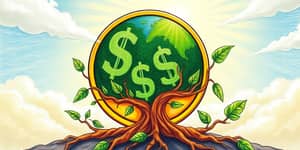
In an era defined by environmental challenges and economic uncertainties, assisting the recovery of ecosystems emerges as a transformative approach that marries sustainability with profit. Far from being a pure cost or philanthropy, restoration unlocks substantial, measurable financial returns and risk reduction by rebuilding natural capital and generating a spectrum of ecosystem services. This article explores how strategic environmental repair can yield multitrillion-dollar global restoration investment opportunities, mitigate risk, and reshape business models for long-term resilience.
Ecological restoration involves assisting the recovery of ecosystems that have been degraded, damaged, or destroyed. Unlike traditional conservation that focuses solely on protection, restoration adds an active component of repair to lands, rivers, wetlands, forests, and coasts. By restoring these natural systems, investors can tap into diverse revenue streams while reducing operational risks associated with resource scarcity and climate impacts.
The concept of an ecological dividend as a profit-enabling investment reframes restoration in purely economic terms. It accounts for direct project returns such as higher yields in agriculture, lower inputs in water treatment, and premium pricing for sustainably certified products. It also quantifies avoided losses, like flood damage or health costs, and recognizes burgeoning markets in ecotourism, carbon credits, and green real estate premiums.
Investing in restoration at scale offers unprecedented returns. Restoring 350 million hectares of degraded ecosystems by 2030 could generate approximately US$9 trillion in ecosystem services and remove 13–26 gigatons of greenhouse gases. UNEP estimates that every dollar spent on nature restoration yields at least nine dollars in economic benefits, with other analyses reporting $3–$30 in returns per dollar invested.
Inaction, by contrast, proves more costly. When factoring in climate damage, disaster relief, and lost productivity, inaction can be at least three times more expensive than proactive restoration. This imbalance underlines a compelling business case: restoration outperforms inaction on both fronts when measured across financial and sustainability metrics.
A thriving restoration economy generates direct and indirect employment, fueling local communities and national tax revenues. In the United States, restoration activities produced $9.47 billion in direct economic output in 2014, supported 126,000 direct jobs, and generated $6.27 billion in labor income. When accounting for induced effects, the sector underpinned 221,000 jobs and $24.86 billion in total output.
Restoration spending also rivals traditional industries in employment multipliers. It supports up to 33 jobs per $1 million spent, with economic multipliers of 1.6–2.6 and employment multipliers between 1.5–3.8. These figures make restoration a labor-intensive, locally grounded sector that can outperform extractive industries in job creation and sustainable growth.
Forward-looking companies are embedding restoration into their core strategies to secure supply chains, reduce exposure to price volatility, and appeal to eco-conscious consumers. Examples include agroforestry projects that enhance crop yields while sequestering carbon, and coastal wetland restoration that protects real estate assets from storm surges.
By prioritizing environmental repair alongside financial metrics, businesses can unlock unlocking lucrative new market opportunities through restoration, strengthen brand loyalty, and achieve lasting competitive advantages. Investors can assess projects based on both social returns and discounted cash flows, effectively treating natural capital as an appreciating asset.
Realizing ecological dividends requires a structured approach that blends science, finance, and policy. Stakeholders should conduct rigorous baseline assessments, apply robust monitoring protocols, and integrate adaptive management to optimize outcomes. Key steps include:
Governments can amplify private investment through incentives such as tax credits, carbon pricing, and streamlined permitting. At the same time, multilateral funds and development banks play a pivotal role in catalyzing capital flows to emerging markets with significant restoration potential.
By embedding restoration into national development plans and corporate sustainability commitments, societies can achieve multiple goals: robust economic growth, disaster risk reduction, and progress toward the UN Sustainable Development Goals.
As global awareness of environmental risk intensifies, the timing is ripe for stakeholders to view ecological restoration not as an expense line item, but as a generator of measurable value. Whether aiming for carbon neutrality, enhanced brand equity, or resilient supply chains, the logic is clear: investing in nature yields dividends that far exceed initial costs.
Together, governments, businesses, communities, and investors can unlock a future where ecological health and economic prosperity reinforce each other. The era of treating the environment as a disposable resource is ending; a new chapter of restoration-led growth awaits those willing to invest wisely in our planet’s healing.
References