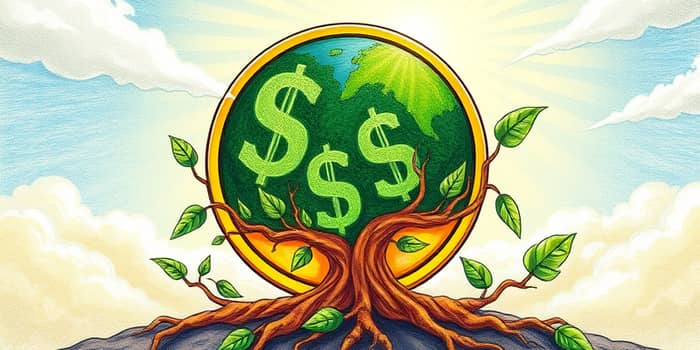
The global financial landscape is undergoing a profound transformation. No longer is success measured solely by quarterly earnings or stock indices. Today, a new paradigm is taking shape: finance with intent, focus, and heart. This article explores how capital can become a true force for positive change, channeling resources toward projects that heal ecosystems, uplift communities, and generate lasting value for all stakeholders.
As we confront climate emergencies and widening social inequities, the notion of money as a neutral tool gives way to a vision of the “conscious coin,” where every dollar invested or spent reflects a commitment to a better world.
Traditional frameworks of **shareholder primacy** are being challenged by a more expansive ethos. At the heart of this shift is conscious, sustainable, and regenerative finance: models that seek not only financial returns, but also measurable social and environmental impact.
Where once businesses chased short-term gains at nature’s expense, a growing number of leaders now embrace a **multi-stakeholder** approach. They recognize that long-term prosperity is intertwined with ecological stability, human dignity, and community resilience.
These conceptual pillars form the bedrock of a broader movement: one that rejects extractive practices and builds systems geared toward health, equity, and shared abundance.
Purpose-driven finance is no niche phenomenon. It now commands trillions of dollars of global assets, underlining its economic significance and growth potential.
According to industry forecasts, the sustainable finance market is poised to expand from USD 7.95 trillion in 2025 to roughly USD 42.68 trillion by 2035, reflecting an impressive compound annual growth rate.
Even amid a “bear-ESG” backdrop in 2025, sustainable debt issuance held firm at nearly USD 1.6 trillion. Meanwhile, assets under management in global sustainable funds climbed to USD 3.9 trillion by Q4 2025, driven by investor preference for transparent, use-of-proceeds instruments.
These figures demonstrate that purpose-driven finance is substantial and growing, resilient to headwinds and increasingly mainstream.
As we move toward 2026 and beyond, several key dynamics will define the conscious coin’s trajectory. 2025 served as a recalibration year, with strategies refined in response to evolving regulations and heightened stakeholder scrutiny.
Institutions from sovereigns to corporates will navigate these themes, adjusting their issuance and investment mixes while advocating for robust standards and incentives.
While ESG metrics remain important, a deeper paradigm is rising: regenerative finance. This approach aspires to mindful, compassionate, cooperative worldviews, rebalancing systems to support the flourishing of people and nature alike.
Regenerative finance invites us to view money not as a scarce resource to be hoarded, but as a dynamic force for renewal and collective prosperity.
Entrepreneurs and investors are increasingly discerning about their capital choices. They recognize that money can be fuel or fire, and they seek partners whose commitments reflect shared values rather than empty slogans.
Beyond institutional flows, each of us wields tremendous influence through daily spending and investment decisions. By treating money as a vote and voice, individuals can amplify businesses and causes aligned with their principles.
Practical steps include:
Over time, these cumulative choices shift market signals, rewarding companies that integrate purpose into their business models.
By aligning our financial habits with our deepest values—whether through ethical investing, community lending circles, or conscious consumerism—we become architects of a more just, resilient, and regenerative economy.
In a world yearning for systemic change, the conscious coin offers a pathway: one where capital catalyzes healing rather than harm, where wealth serves as a bridge to shared prosperity, and where every financial decision carries the potential to nurture life on Earth. The future of finance is not just about numbers on a balance sheet; it is about the stories we choose to invest in and the legacies we leave for generations to come.
References