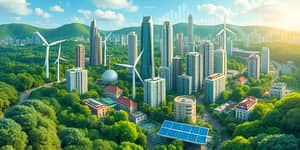
In a world facing climate crises and social inequality, a powerful shift is emerging: the rise of a net-positive impact economy that goes beyond mere sustainability. By emulating nature’s wisdom, a regenerative model actively restores ecosystems, uplifts communities, and generates long-term wealth without depleting resources. This article explores eight guiding principles, investment pathways, real-world examples, and the metrics that redefine success.
Unlike traditional sustainability that aims to maintain current conditions, regeneration is a holistic systems-thinking approach focused on building capacity across environmental, social, human, and financial capitals. It recognizes that healthy systems continuously renew themselves by cycling nutrients, ideas, and resources.
In practice, regeneration means designing projects that leave landscapes and communities in a better condition than before. From restoring wetlands to revitalizing neglected urban districts, every initiative contributes to a larger network of thriving, interconnected systems.
Ecologists describe the “edge effect” where two ecosystems meet—like a river and an ocean—creating zones of incredible biodiversity and productivity. Economists apply this metaphor to innovation: breakthroughs often occur at the boundaries between disciplines, cultures, and industries.
By fostering cross-sector collaboration and inclusive dialogue, investors unlock a field of transformative potential. These edge zones spark creativity, break down silos, and generate solutions that would remain hidden within rigid structures.
Natural metabolism relies on efficient circulation: oxygen, nutrients, and energy flow in loops rather than straight lines. A regenerative economy replicates this by designing circular flows of money, information, goods, and waste streams that feed back into productive use.
Policies and business models prioritize recycling, upcycling, and closed-loop manufacturing. Waste is reframed as a valuable input, and financial instruments direct capital to projects that reinforce these loops, ensuring resilience and adaptability.
A regenerative framework harmonizes seemingly opposing forces: efficiency with resilience, competition with collaboration, diversity with coherence. It rejects the pursuit of perfect optimization in favor of active equilibrium, where systems can absorb shocks and evolve.
By valuing multiple scales—small, medium, and large—regenerative design adapts to local contexts while connecting to global networks, mirroring nature’s capacity to self-organize across levels of complexity.
The Abundance Economy represents an invitation to reimagine wealth as the capacity to nurture and regenerate life. By aligning investments with natural principles—edges that spark innovation, circulatory flows that build resilience, and restorative practices that uplift communities—investors can catalyze exponential prosperity.
This journey transcends scarcity narratives, unlocking a future where regeneration becomes self-fulfilling, and abundance multiplies across scales. As consciousness and systems evolve in tandem, there is no ceiling to the prosperity we can create—just as living ecosystems continually defy entropic decline.
References