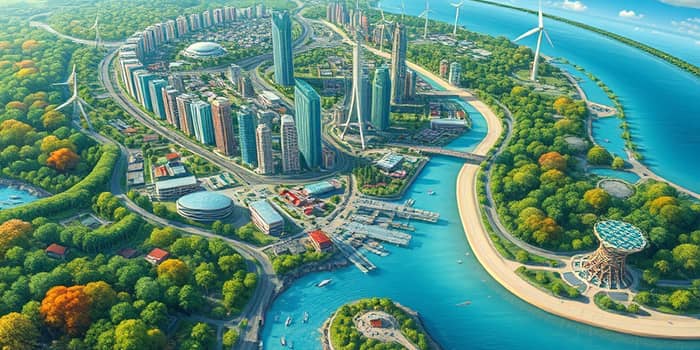
Our planet’s health and our economies are inseparable. As global challenges mount, a shift from exploiting nature to championing its restoration and innovation is no longer optional—it’s imperative.
According to the World Economic Forum, over half of global GDP—an astonishing $44 trillion—is moderately or highly dependent on nature. When we degrade ecosystems, we jeopardize food security, water supplies, and even the raw materials that power industries.
BloombergNEF’s analysis of ten major corporations revealed more than $83 billion in direct losses from mismanaged natural interactions. In parallel, unchecked biodiversity loss could shrink global GDP by $2.7 trillion annually by 2030. These figures underscore systemic threats to asset performance and macroeconomic resilience.
Nature-based solutions (NbS) harness the power of healthy ecosystems to address societal challenges—floods, droughts, heatwaves—while delivering benefits for biodiversity and human well-being.
The Nature Conservancy estimates that NbS could mitigate nearly one-third of global greenhouse gas emissions through improved land management and conservation. Moreover, studies show these approaches often cost less than traditional engineered solutions, while delivering multiple co-benefits.
Biomimicry goes beyond nature-inspired aesthetics. It involves studying nature’s designs and applying those strategies to solve human problems with efficiency and elegance.
Between 2000 and 2013, biomimetic innovation activity grew sevenfold; academic publications increased eightfold. By 2030, bioinspired design could contribute $1.6 trillion to the global GDP, unlocking transformative industries.
Mobilizing finance is critical to scale both NbS and biomimicry. Public, private, and blended structures are emerging to redirect capital toward nature’s ingenuity.
Beyond public programs, impact investors are underwriting resilience bonds and ecosystem service markets. Corporations are issuing nature-related transition bonds, while multilateral development banks blend concessional capital to lower project risk.
Turning vision into reality requires collaboration across sectors and geographies. Here are key actions for diverse actors:
By aligning funding streams with ecological and innovation goals, we can transition from extractive models to regenerative and emergent economies. This paradigm shift not only safeguards the biosphere but sparks new industries and resilience.
From extraction to emergence, the journey begins with recognizing nature as an indispensable partner—and ending with a future where human ingenuity and natural processes co-create lasting prosperity.
References