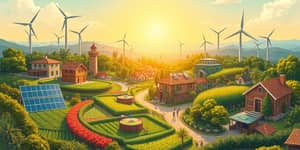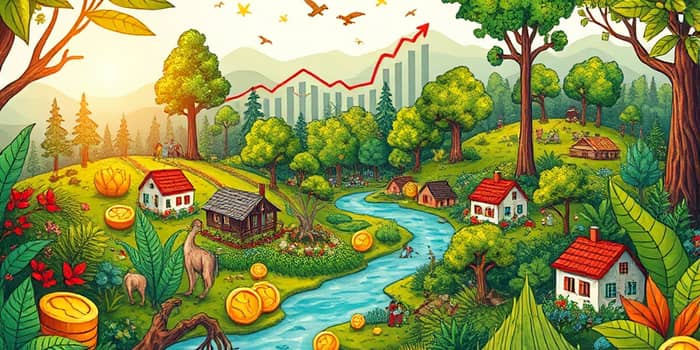
As the limitations of extractive economic models become clear, a new paradigm emerges in which financial growth and ecological regeneration advance hand in hand. By valuing nature as an essential asset rather than a limitless resource, communities, investors, and policymakers can achieve enduring prosperity through environmental stewardship.
For centuries, the dominant model of wealth focused on short-term gains—extracting minerals, deforesting land, and treating water as an expendable commodity. That model neglects the fact that healthy ecosystems form the invisible foundation of the economy.
Today, forward-thinking leaders recognize that nature as a form of capital underpins everything from agriculture to climate stability. By aligning investment strategies with ecological regeneration, they unlock new avenues for resilient, long-term growth.
At its core, environmental stewardship embodies the shared duty to manage natural resources responsibly. It blends philosophy, behavior, and practical action to protect, restore, and sustainably use ecosystems.
Meanwhile, natural capital—forests, soils, water bodies, and biodiversity—yields invaluable ecosystem services. Freshwater supplies, pollination, carbon sequestration, and flood control all flow from these living assets. Acknowledging these services transforms our understanding of wealth from narrow financial metrics to holistic wealth creation framework.
Sustainability, in this context, means forging conditions where humans and nature coexist in productive harmony, meeting present needs without compromising the capacity of future generations to thrive.
Compelling data confirms that ecological stewardship delivers robust financial returns. According to the UN Environment Programme, every restoration is an asset class when $1 invested in nature restoration generates at least $9 in economic benefits—from water purification and flood protection to job creation and carbon storage.
These figures illustrate how investments in ecological projects constitute a new asset class—one that blends environmental resilience with financial reward.
Market-based mechanisms, such as payments for ecosystem services and conservation credits, further strengthen this case. By monetizing clean air, water filtration, and wildlife habitat, landowners secure new revenue streams while preserving vital ecosystems.
African nations are leading the charge in embedding natural capital into national wealth calculations. In Ethiopia, renewable natural capital accounts for 28% of total wealth, driving policies for climate resilience and sustainable land use.
Rwanda has emerged as a continental champion in natural capital accounting, using land, water, and minerals data to guide sustainable development and economic diversification. Uganda’s pioneering water, forest, and ecosystem service accounts demonstrate the power of integrated planning. Zambia’s comprehensive ecosystem accounts round out a pan-African blueprint for coupling environmental stewardship with economic transformation.
This continental leadership underscores that safeguarding nature is not just an environmental imperative but a strategy for enduring prosperity.
True wealth in the 21st century spans multiple dimensions—financial, environmental, social, and even spiritual. The concept of shared responsibility for environmental quality emphasizes that every business and investor is, by nature, an environmental steward. Incorporating ecological discipline enhances financial performance, social stability, and community well-being.
By embracing an integrated multi-bottom-line wealth creation mindset, companies and governments foster innovation that benefits both people and the planet.
Turning these insights into action requires strategic commitment. Investors can adopt natural capital accounting to assess ecosystem dependencies and risks in their portfolios. Policymakers should craft incentives—such as tax credits, grants, and conservation markets—to reward stewardship outcomes.
Partnerships with Indigenous communities unlock traditional knowledge and foster co-management of lands, delivering high returns and cultural revitalization. Infrastructure planners can employ tools that quantify the economic value of ecological measures, ensuring that roads, bridges, and public spaces enhance rather than degrade natural systems.
Redefining wealth through ecological stewardship bridges the gap between profitability and planetary health. By treating nature as economic infrastructure, not an amenity, we lay the groundwork for prosperity that endures across generations.
As global challenges intensify, the choice is clear: continue with extractive models that erode our natural inheritance, or embrace a regenerative economy that uplifts communities, restores ecosystems, and secures financial growth. The path forward lies in recognizing that ecological stewardship is not charity—it is the most prudent investment we can make for our shared future.
References