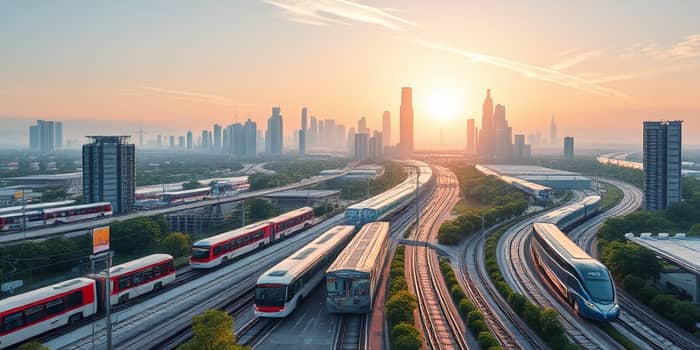
The transportation sector stands at a pivotal juncture. With global emissions climbing and investor capital seeking long-term returns, decarbonizing transport offers both environmental and economic incentives. This journey requires rethinking infrastructure, technology and policy. By aligning climate goals with market dynamics, stakeholders can unlock substantial growth opportunities while steering the world toward net-zero emissions.
Transportation currently represents roughly 15–20% of total greenhouse gas emissions worldwide. In the United States alone, it is the largest emitting sector, accounting for nearly 27–29% of national emissions. Left unchecked, global transport emissions could rise by as much as 60% by 2050, driven by population growth and rapid urbanization.
Freight and logistics contribute an estimated 10–11% of global emissions, while light-duty vehicles account for about 50% of U.S. transport energy use. The sector’s long-lived infrastructure and assets—including roads, ports and vehicle fleets—can lock in high emissions for decades. Decarbonization demands both rapid technology deployment and modal shifts toward cleaner options to break the link between economic growth and carbon output.
National blueprints and regulations are setting the stage for massive capital flows. In 2023, the U.S. unveiled the National Blueprint for Transportation Decarbonization, jointly authored by DOE, DOT, EPA and HUD. Its three core strategies prioritize:
Quantitative targets include 50% zero-emission light-duty vehicle sales by 2030, 500,000 public EV chargers, and a fully zero-emission federal vehicle fleet by 2027. Such mandates create stable demand signals, making zero-emission vehicle deployment initiatives more bankable for private investors.
Beyond U.S. commitments, international bodies are crafting toolkits to decarbonize transport worldwide. The ITF’s Decarbonising Transport Initiative offers a Transport Climate Action Directory and analytical support for policy design. Meanwhile, the World Bank’s Transport Decarbonization Investment series addresses barriers in emerging economies, proposing innovative financing and risk mitigation for low-carbon projects.
Non-profit groups like the Clean Air Task Force focus on hard-to-electrify transport segments—notably aviation, shipping and long-haul trucking—by catalyzing hydrogen markets and sustainable aviation fuels. At the same time, Brookings highlights the importance of policy certainty and stable frameworks to mobilize trillions in infrastructure and fleet upgrades.
Most decarbonization roadmaps converge on three complementary pillars:
Light-duty road transport remains the first frontier, with battery electric vehicles (BEVs) capturing growing market share. Medium- and heavy-duty sectors are exploring hydrogen fuel cell adoption and biofuel blends for shorter turnaround. Aviation is advancing sustainable aviation fuel usage to achieve near-term emissions reductions, targeting a 30% improvement in aircraft fuel efficiency by 2030. Shipping firms are piloting ammonia-powered vessels to replace conventional bunker fuels over the next two decades.
For investors, the transport decarbonization wave presents diversified entry points:
Key considerations include regulatory risk, technology maturity and infrastructure lead times. Investor appetite for sustainable growth should be calibrated against policy timelines and potential carbon pricing mechanisms. Blended finance solutions, green bonds and public-private partnerships can de-risk large capital projects and attract institutional commitments.
Numerous jurisdictions are already reaping benefits from early investments. In California, public lands transit agencies have replaced over 800 diesel buses with zero-emission models, reducing annual emissions by thousands of metric tons. European ports like Rotterdam are pioneering onshore power for container ships, cutting local air pollution and creating fresh investment streams in shore-power infrastructure.
Meanwhile, logistics firms in China leverage digital freight platforms and electric trucks to optimize last-mile delivery routes, cutting operating costs by up to 25%. Major airlines have entered voluntary carbon markets and committed to SAF offtake agreements, spurring supply chain scale-up and price stabilization.
Decarbonizing transportation is not a solo venture. It demands coordinated action across governments, industry, finance and civil society. Investors can help define standards, fund demonstration projects, and engage in policy dialogue to ensure scalable solutions. By channeling capital into clean technologies and resilient infrastructure, they tap into a multitrillion-dollar market while advancing climate goals.
The ride toward zero carbon transport requires vision, patience and perseverance. Yet the prize—reduced air pollution, energy security and robust economic returns—is within reach. With decarbonization as investment opportunity at the forefront, stakeholders can drive a cleaner, more equitable mobility future.
References