As the global community seeks innovative solutions to feed a growing population while drawing down excess carbon from the atmosphere, one ancient technique is experiencing a modern renaissance. Biochar—charcoal made through controlled pyrolysis of organic waste—offers a unique convergence of soil enrichment and climate mitigation. Farmers, scientists, and policymakers are increasingly exploring its potential.
This article delves into the science, history, practical applications, and policy pathways that underpin the biochar boom. You will find guidance on production methods, agronomic benefits, climate impacts, economic opportunities, and ways to navigate the challenges ahead.
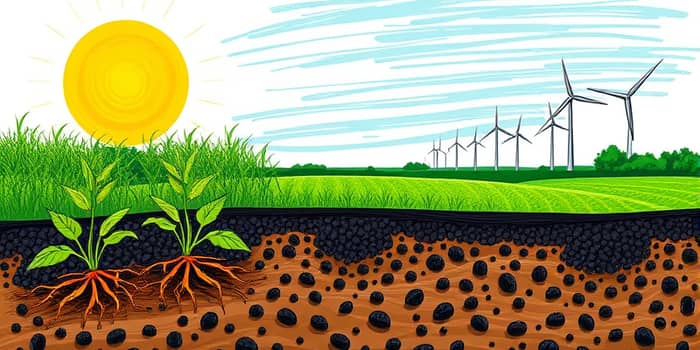
Biochar is a highly porous, carbon-rich material produced by heating biomass—wood chips, crop residues, manures—in a low-oxygen environment. Through pyrolysis at temperatures typically between 300–700°C, most of the volatile compounds are driven off, leaving behind a stable carbon matrix.
Unlike general black carbon from fossil fuels, biochar is specifically designed for carbon sequestration in agricultural soils. Its structure resists microbial breakdown, persisting for hundreds to thousands of years and creating long-term reservoirs of soil organic carbon.
Thousands of years ago, indigenous communities in the Amazon Basin applied a version of biochar to build "Terra Preta," the extremely fertile, dark soils of Terra Preta. They mixed fire residues, kitchen scraps, and charred biomass in a practice often called the “slash and char soil management technique”, sharply contrasting with slash-and-burn cultivation.
Modern scientific interest surged in the late 20th century, as researchers uncovered the exceptional fertility and carbon stability of these ancient soils. Over the past two decades, biochar has been championed not only as a soil amendment but also as a scalable strategy for transforming agriculture and climate mitigation.
The cornerstone of biochar production is pyrolysis: heating biomass in limited oxygen to generate char, bio-oil, and syngas. Yield, chemical properties, and co-products depend on temperature, heating rate, and residence time.
This comparison helps producers choose the right process based on desired biochar yield, energy recovery, and feedstock type.
Farmers apply biochar in various ways to optimize soil health and crop performance. Common methods include:
Once in the soil, biochar contributes multiple agronomic functions:
However, responses can vary. Positive yield gains are most consistent in degraded, low-CEC, or acidic soils. In already fertile fields, excessive rates or mismatched chars may immobilize nutrients and temporarily depress growth.
Biochar holds promise as a negative-emissions technology. By diverting biomass from decomposition or burning into a stable form, it can sequester carbon for centuries. Some analysts estimate a global biochar program could remove billions of tons of CO₂ equivalents from the atmosphere annually if adopted at scale.
In addition to long-term storage, biochar-amended soils often show reduced emissions of nitrous oxide and methane—powerful greenhouse gases. Co-generation of bio-oil and syngas during pyrolysis further displaces fossil fuels.
Economically, biochar faces both opportunity and challenge. Production costs hinge on feedstock transport, pyrolysis technology, and labor. Field application costs and crop response variability influence farmer adoption.
Markets for carbon credits, enhanced crop yields, and co-product energy streams can improve profitability. Emerging marketplaces offer biochar-based carbon credits, rewarding producers for demonstrating permanent carbon removal.
Despite its allure, biochar is not a universal remedy. Key considerations include:
- Feedstock quality: Contaminants in biosolids or polluted wood can introduce heavy metals or toxins.
- Rate optimization: Excessive biochar may alter soil chemistry detrimentally.
- Variable agronomic outcomes: Local soil conditions and crop types dictate benefits.
- Lifecycle emissions: Transportation and pyrolysis energy sources affect net carbon balance.
To realize biochar’s full potential, supportive policies are essential. Incentives for sustainable feedstock collection, subsidies for pyrolysis equipment, and streamlined carbon credit protocols can accelerate adoption. Research grants should target region-specific trials, best-practice guidelines, and long-term monitoring of soil health and carbon stocks.
Collaborations between farmers, industry partners, and governments will be pivotal. As standards develop and markets mature, biochar could emerge as a cornerstone of regenerative agriculture and climate strategies.
In the journey toward a resilient, low-carbon future, biochar stands out as an intersection of agricultural innovation and environmental stewardship. By harnessing ancient wisdom through modern science, we can build healthier soils, cleaner air, and more prosperous rural communities.
References