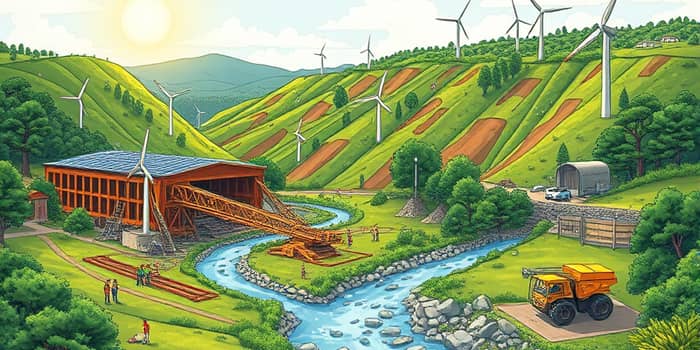
Mining is often viewed solely as a way to unearth raw materials. Yet in an era of pressing environmental and social challenges, it must evolve into a force for broader value creation.
By shifting our perspective from short-term extraction to long-term stewardship, we can ensure mining serves both people and planet.
At first glance, mining represents a stark contradiction. On one hand, it inflicts significant environmental and social risk through habitat destruction, water contamination, and community disruption. On the other, it is the essential supplier of critical minerals for wind turbines, solar panels, electric vehicles, and other #technology that underpin the global low-carbon transition.
This paradox highlights the urgent need to adopt practices that prioritize environmental stewardship, social responsibility, and ethical governance throughout the mine lifecycle.
True sustainability in mining transcends the volume of ore extracted. It demands a holistic approach that embeds the concept of sustainable development into every decision.
By aligning with the principle of “development which meets the needs of current generations without compromising the future,” mining firms can deliver shared prosperity.
Traditional approaches to metal extraction have exacted a steep toll on ecosystems. Deforestation and ecosystem fragmentation accompany large open pits and tailings dams. Soil is stripped of its top layer, leading to erosion and loss of fertility.
Water pollution follows when mine waste laced with arsenic, mercury, cyanide, and other toxins is dumped into streams, rivers, and lakes. Up to 180 million tonnes of toxic waste enter fresh and marine waters annually, threatening aquatic life and public health.
Meanwhile, heavy machinery emits greenhouse gases and airborne dust that aggravate climate change and respiratory illness. Tailings dam failures can unleash catastrophic spills, leaving landscapes unusable for decades.
Communities located near mining sites often contend with displacement, loss of livelihoods, and cultural disruption. Boom-and-bust economic cycles can inflate local incomes briefly, only to leave towns impoverished post-closure.
Many mining regions begin with pre-existing poverty and poor infrastructure. Without robust benefit-sharing mechanisms, operations compound inequality rather than alleviate it. Ensuring that revenues fund healthcare, education, and sustainable livelihoods is critical to equitable development.
Leading companies and industry bodies have articulated frameworks to guide responsible operations. The International Council on Mining and Metals (ICMM) outlines principles focusing on:
Technological innovations bolster these efforts. Drone-based aerial surveys reduce land disturbance. Real-time water monitoring systems detect contamination before it spreads. Renewable energy installations on-site cut carbon emissions and operating costs.
As global demand for renewable energy technology skyrockets, mining’s role becomes ever more vital. Critical minerals such as lithium, cobalt, nickel, and rare earth elements power batteries and electronics. Ensuring that their extraction is conducted responsibly underpins a credible pathway to net-zero emissions.
Mining companies are already integrating critical minerals for renewable energy into their portfolios while deploying renewables at their sites—over one gigawatt of solar and wind is operational or planned at global operations. This dual approach reduces carbon footprints and secures supply chains for clean-energy industries.
Strong government regulation and industry-led initiatives must work hand in hand. Environmental impact assessments, stringent tailings management standards, and water quality controls should be enforced through robust legal frameworks. At the same time, voluntary charters like Hindalco’s Sustainable Mining Charter employ a systems-thinking approach to environmental management, ensuring continuous improvement.
Transparency in reporting, community consultations, and respect for indigenous rights build trust and social license. Governments can further support by aligning mining policies with Sustainable Development Goals and enforcing regulations that deter non-compliant actors.
Reimagining mining as a generator of broader value—ecological, social, and economic—represents both a moral imperative and a smart business strategy. Companies that embrace sustainability can mitigate risks, lower costs, and secure their license to operate in a world demanding greater accountability.
Communities benefit through improved infrastructure, job opportunities, and environmental stewardship that preserves natural assets. Investors gain confidence in predictable, resilient returns. And society at large advances toward a cleaner, more equitable future.
By extracting value, not just resources, the mining industry can become a catalyst for positive transformation—one that meets the needs of today without compromising the prospects of tomorrow.
References